
Australian Sovereign Types: Identify Yours
Every Australian gold sovereign and half sovereign type, from the first Sydney Mint coins of 1855 to the last Melbourne and Perth sovereigns of 1931. Find the one that matches yours, then send us a photo for a free valuation.
Not sure what it's worth yet? Our gold sovereign value guide has a live gold price calculator and recent auction results.
Start here: whose portrait is on your coin?
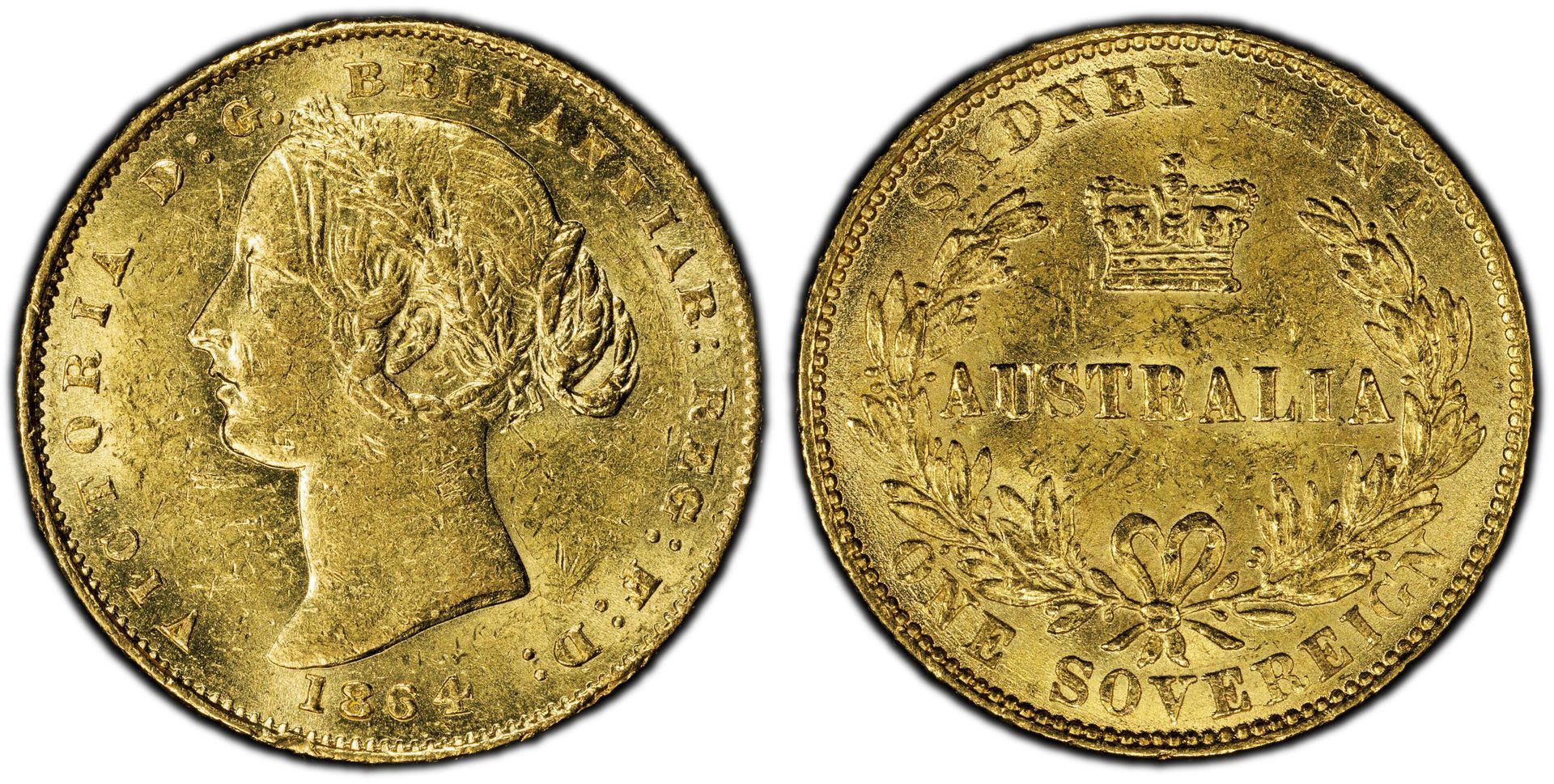 Sydney Mint type
1855–1870
Sydney Mint type
1855–1870
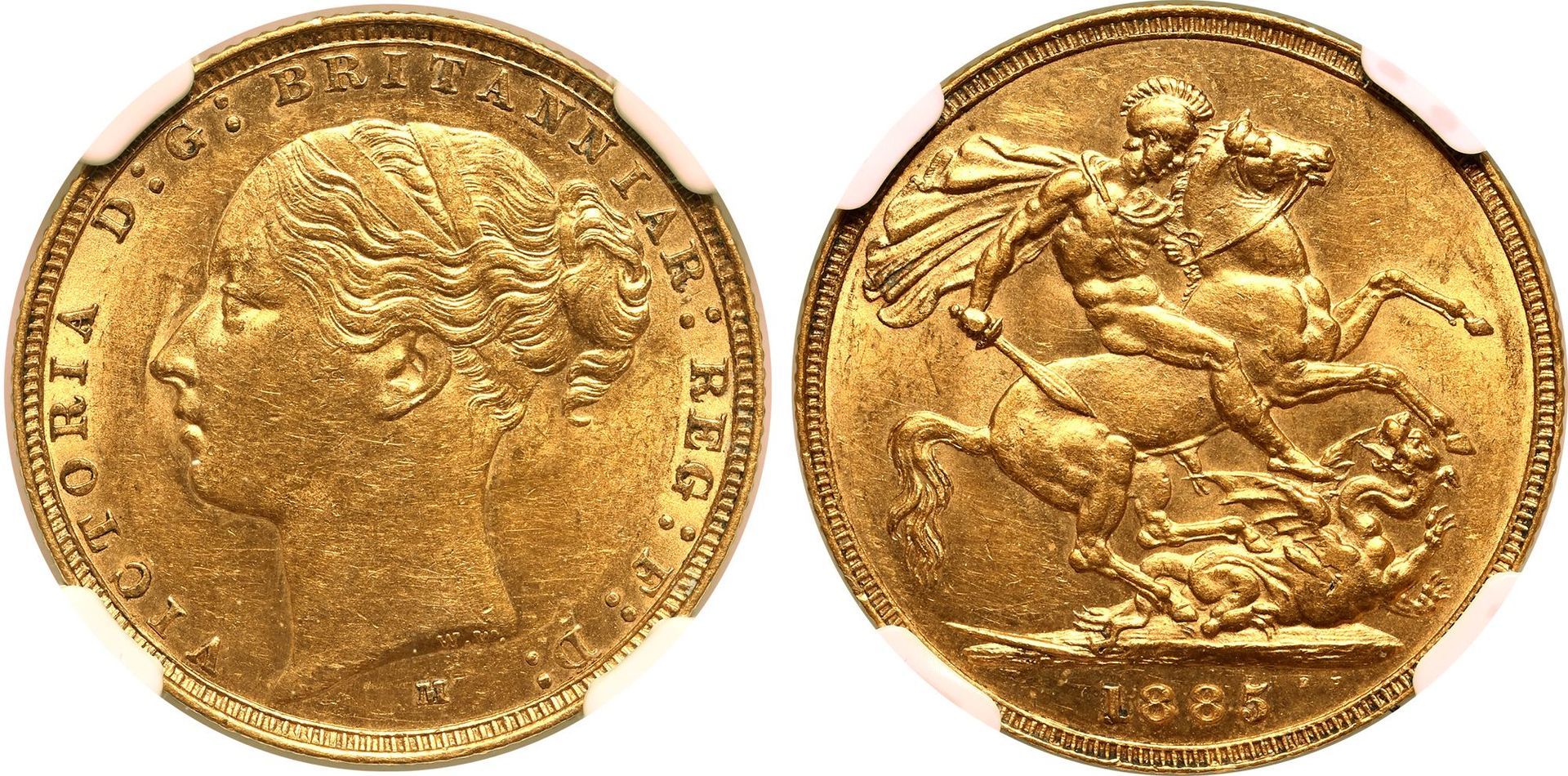 Young Victoria
1871–1887
Young Victoria
1871–1887
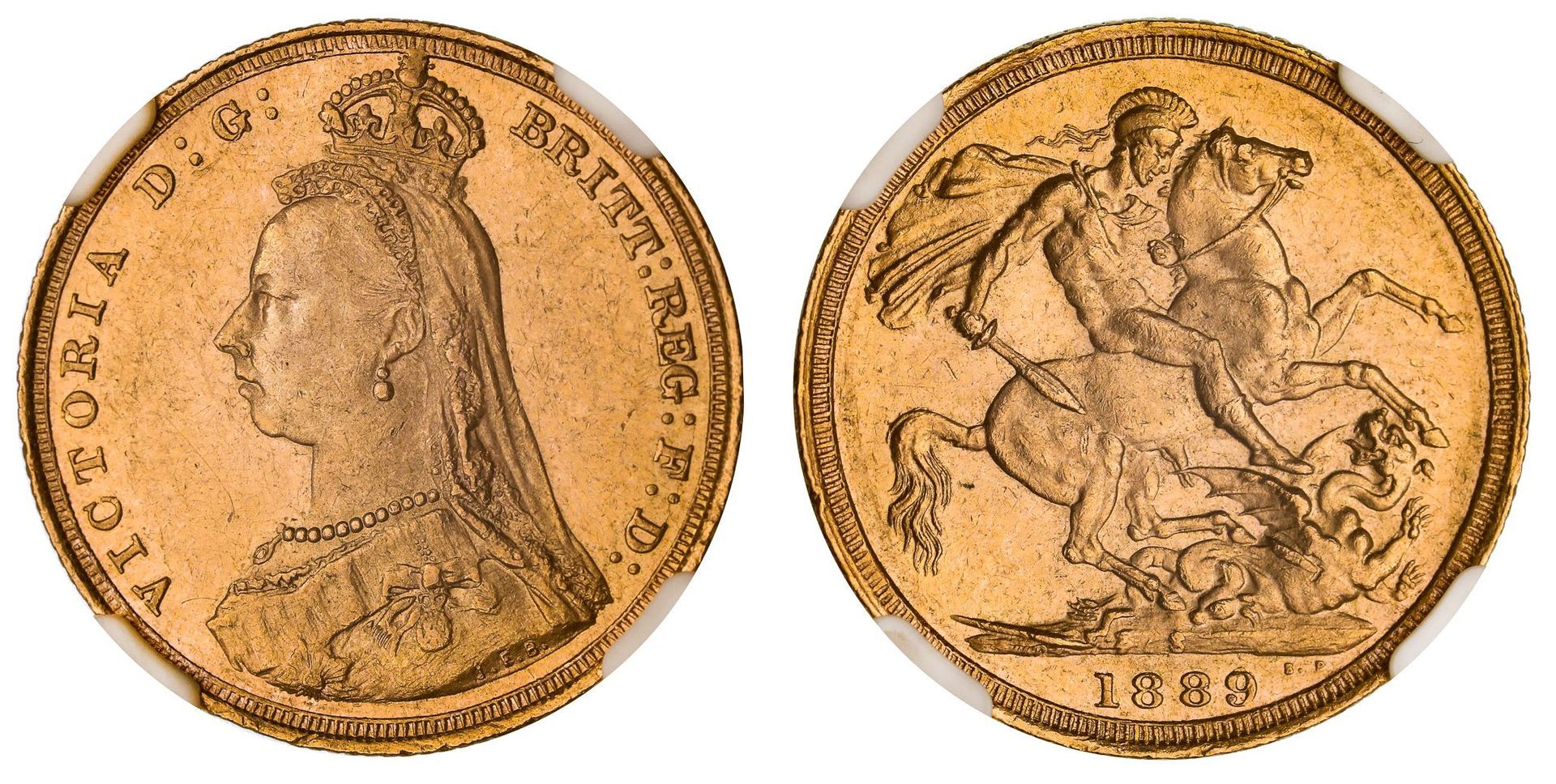 Jubilee Victoria
1887–1893
Jubilee Victoria
1887–1893
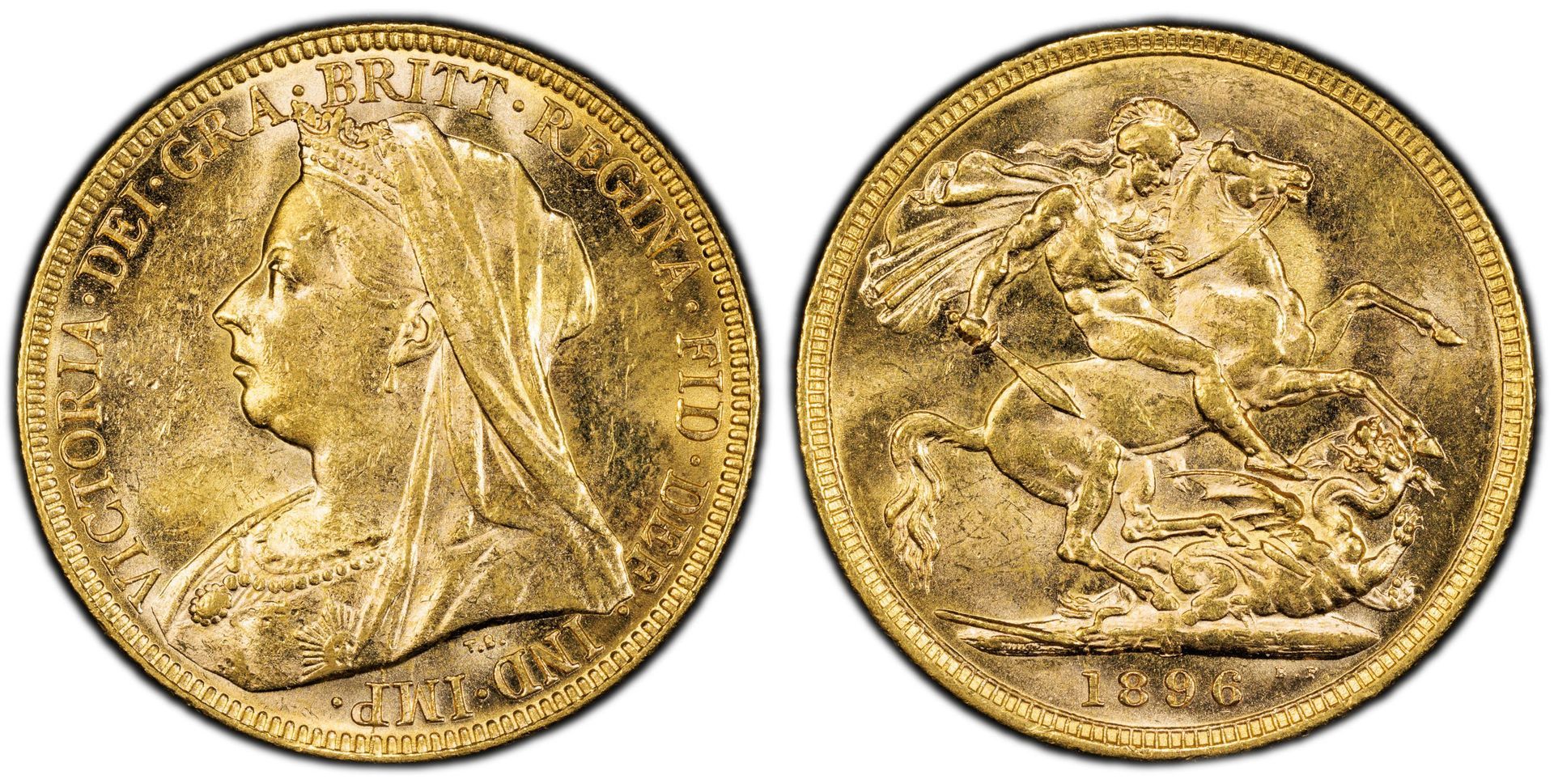 Veiled Victoria
1893–1901
Veiled Victoria
1893–1901
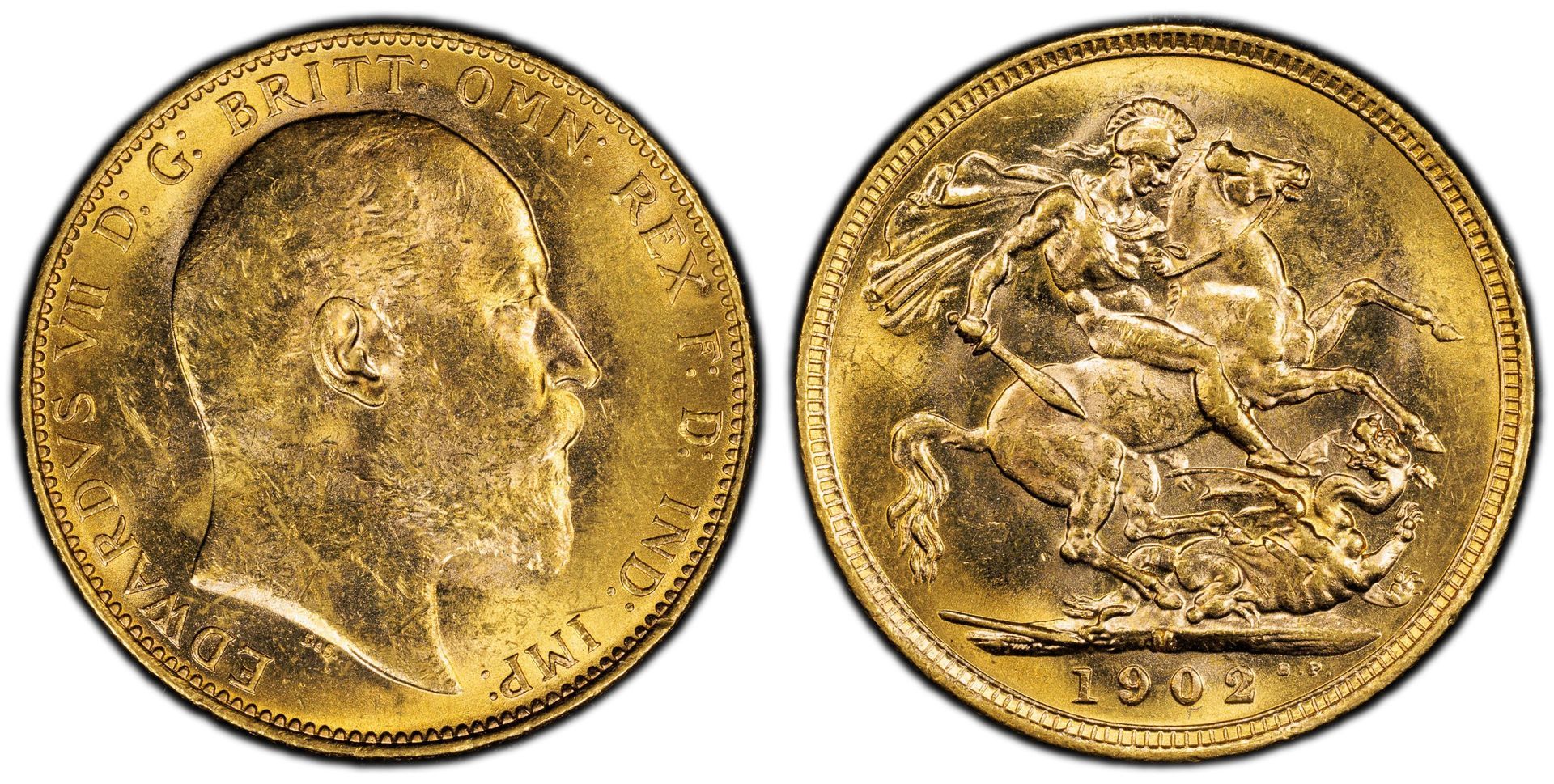 Edward VII
1902–1910
Edward VII
1902–1910
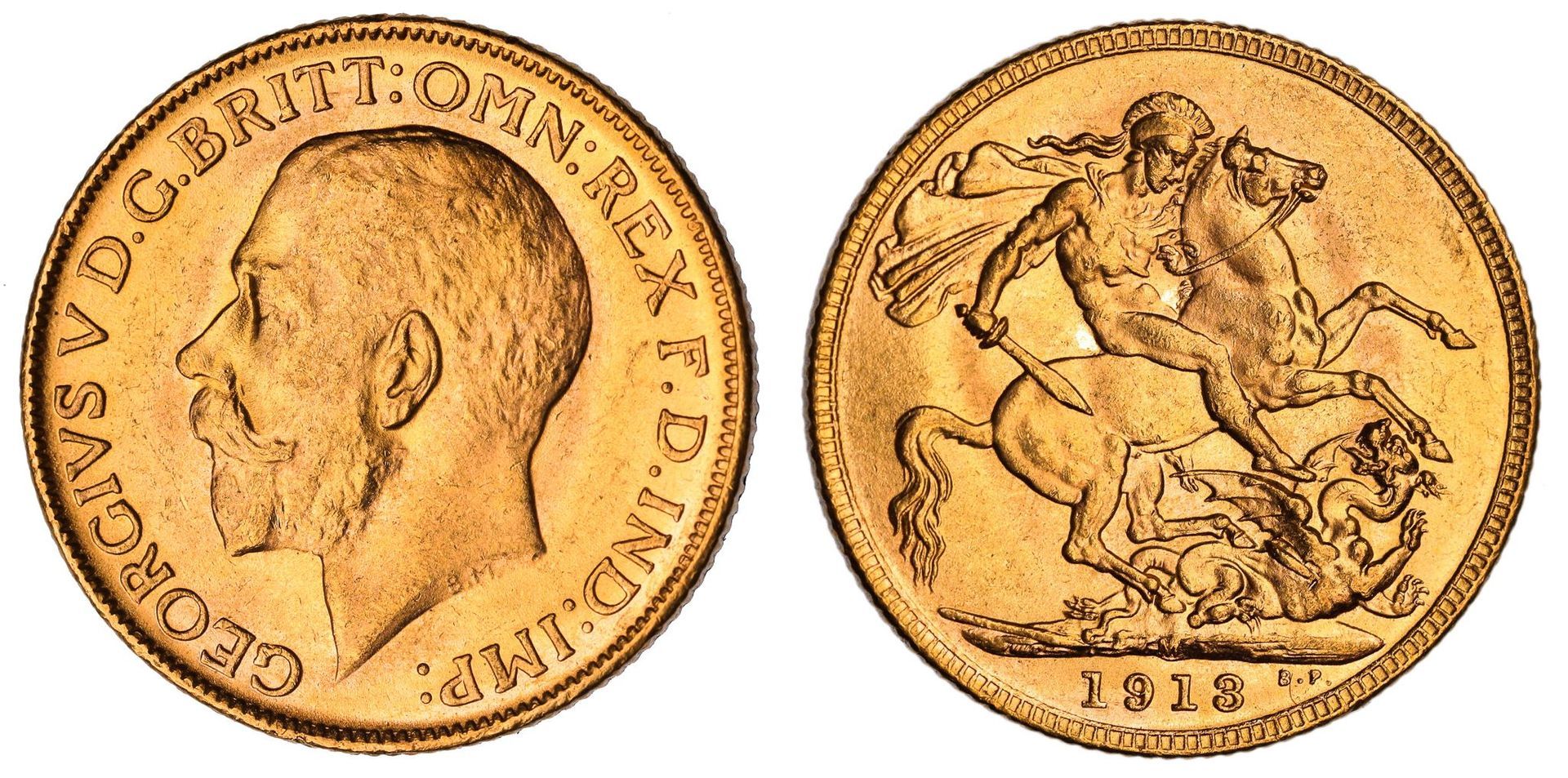 George V
1911–1931
George V
1911–1931
How to identify your sovereign
- Look at the portrait
Queen Victoria appears young, crowned (Jubilee) or veiled. Edward VII faces right; George V faces left. This tells you the era.
- Turn it over
The reverse shows either St George slaying the dragon, a crowned shield, or the words SYDNEY MINT AUSTRALIA on the earliest coins.
- Find the mint mark
A small S (Sydney), M (Melbourne) or P (Perth). Where it sits depends on the type, and each section below shows you where to look.
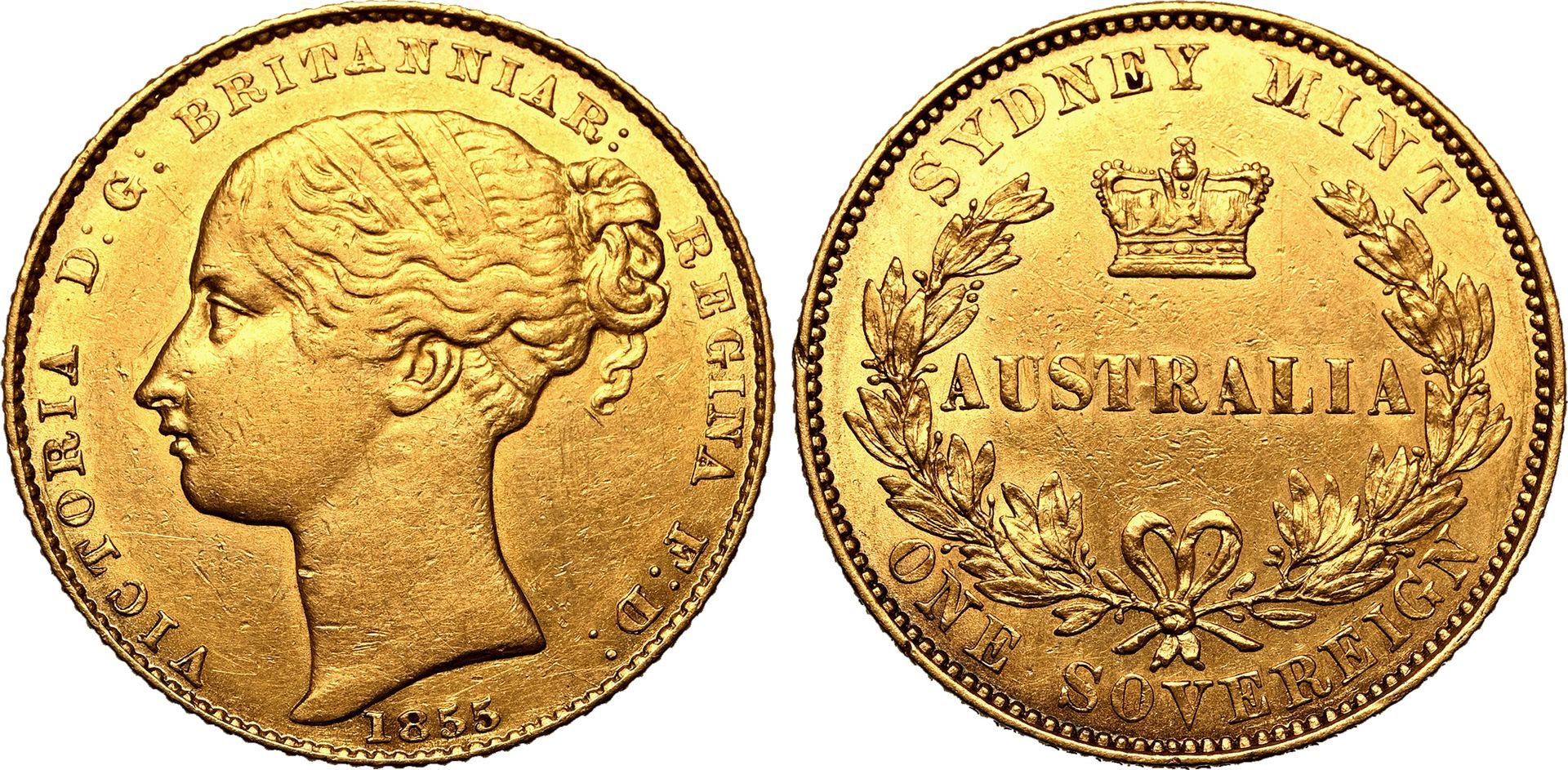
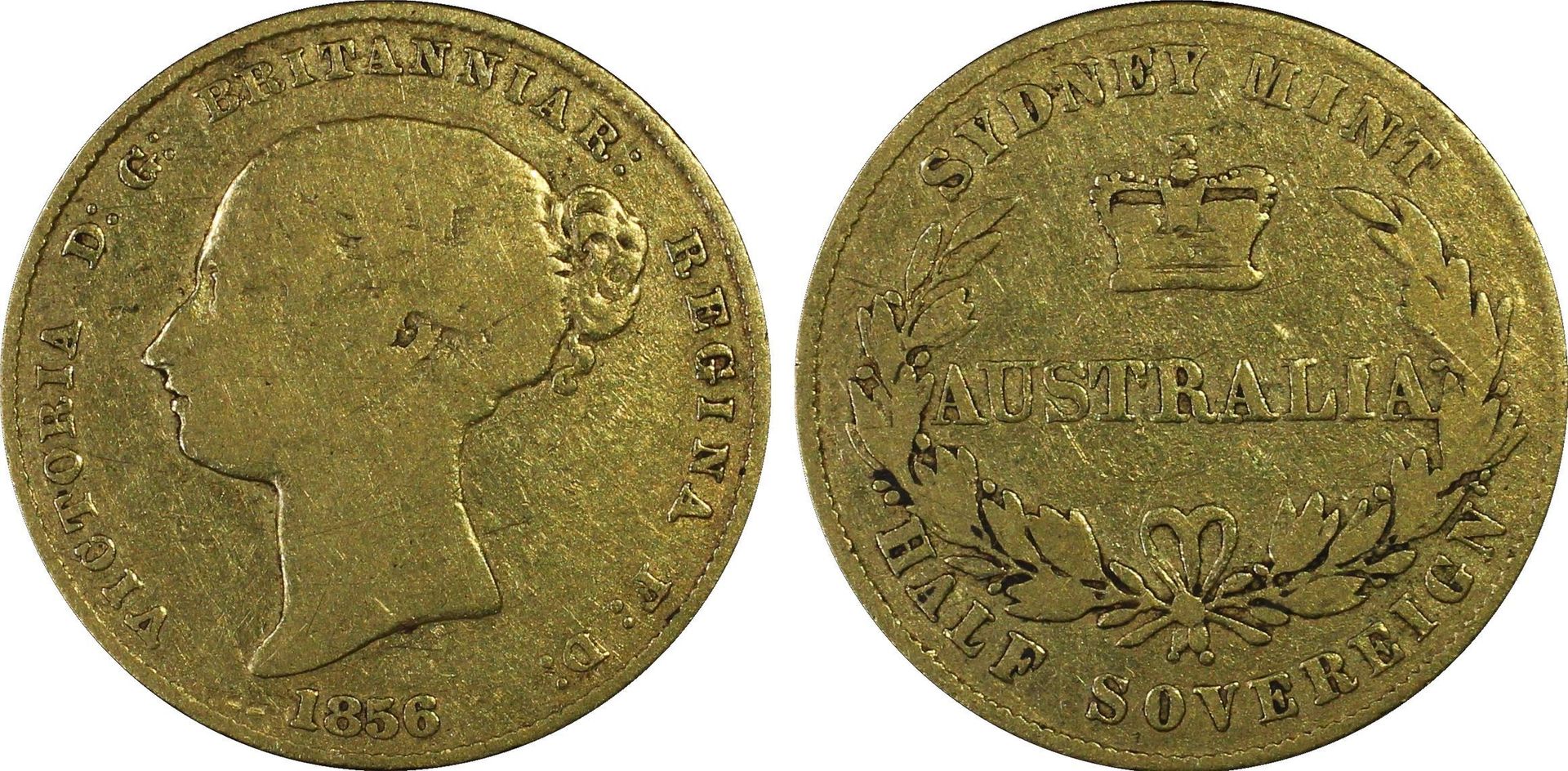
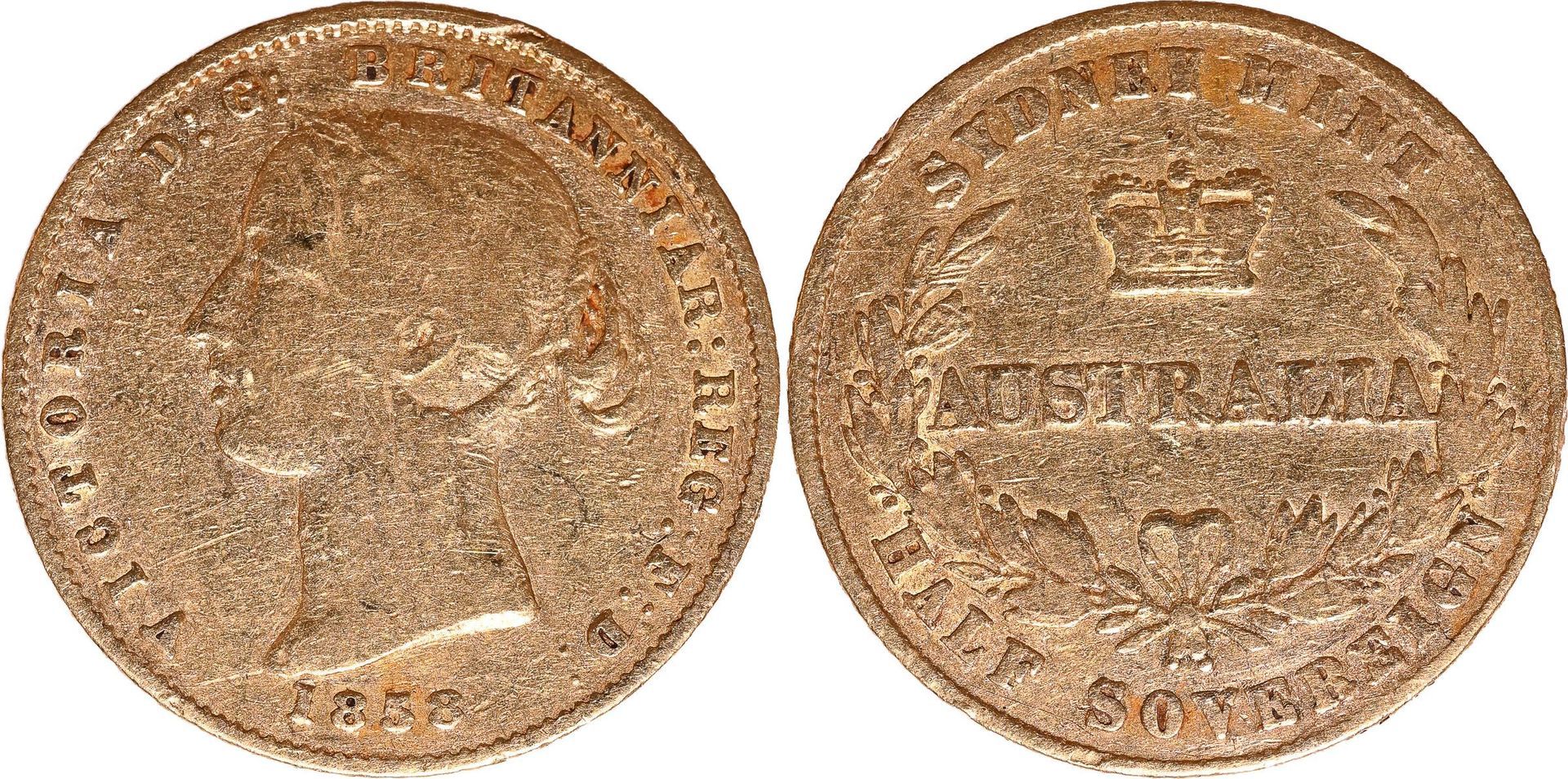
Sydney Mint type 1855–1870
Australia's first gold coins, struck at the Sydney Mint from 1855 using local gold. Instead of the British designs, the reverse reads SYDNEY MINT AUSTRALIA around a crown and wreath. Type I (1855–1856) shows Queen Victoria with her hair tied by a plain ribbon. Type II, from 1857, adds a wreath of banksia leaves to her hair.
Mint mark: None. Look for the words SYDNEY MINT AUSTRALIA on the reverse.
The 1855 half sovereign is one of the key rarities of the series. See Australia's rarest coins.
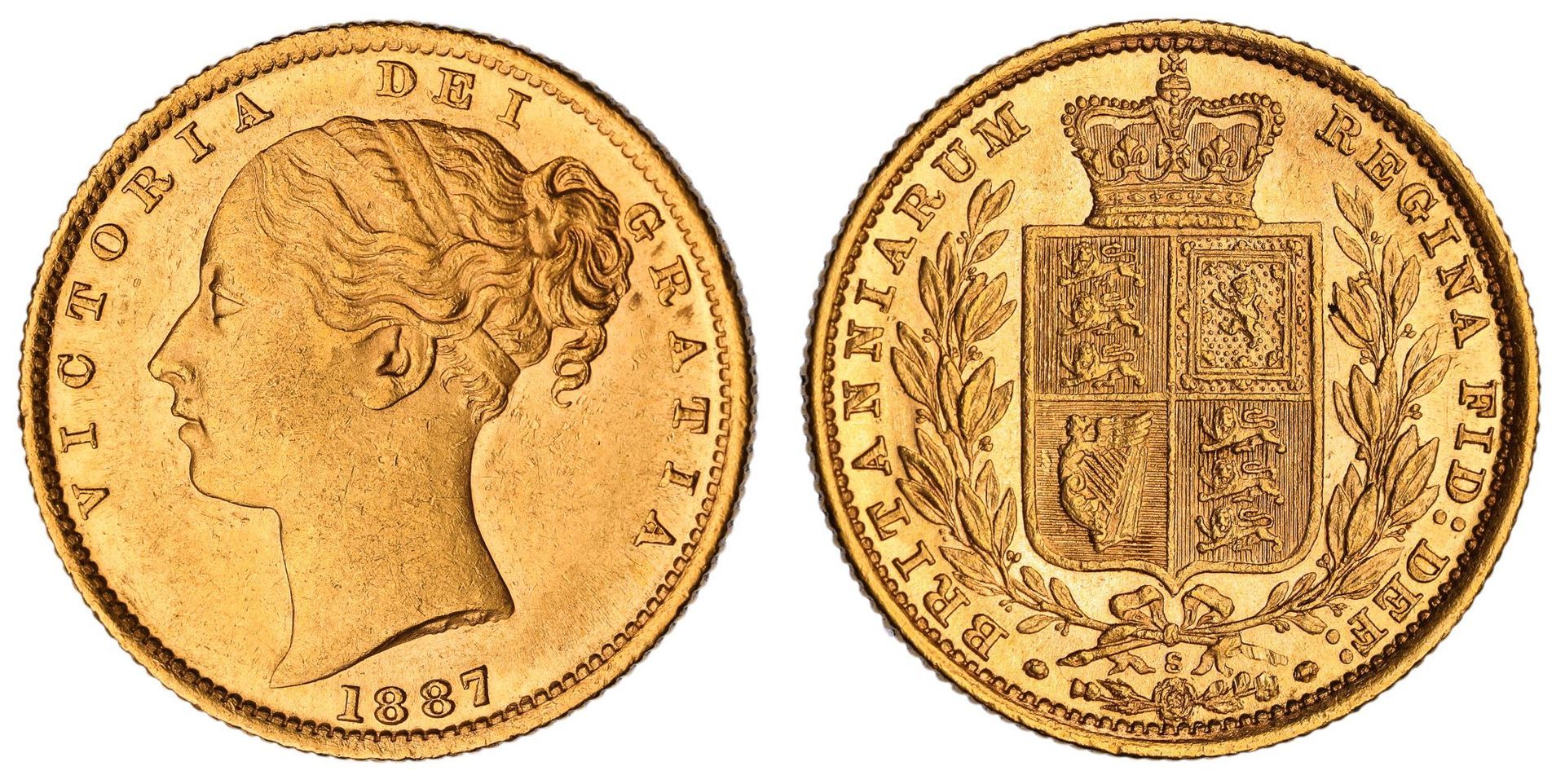
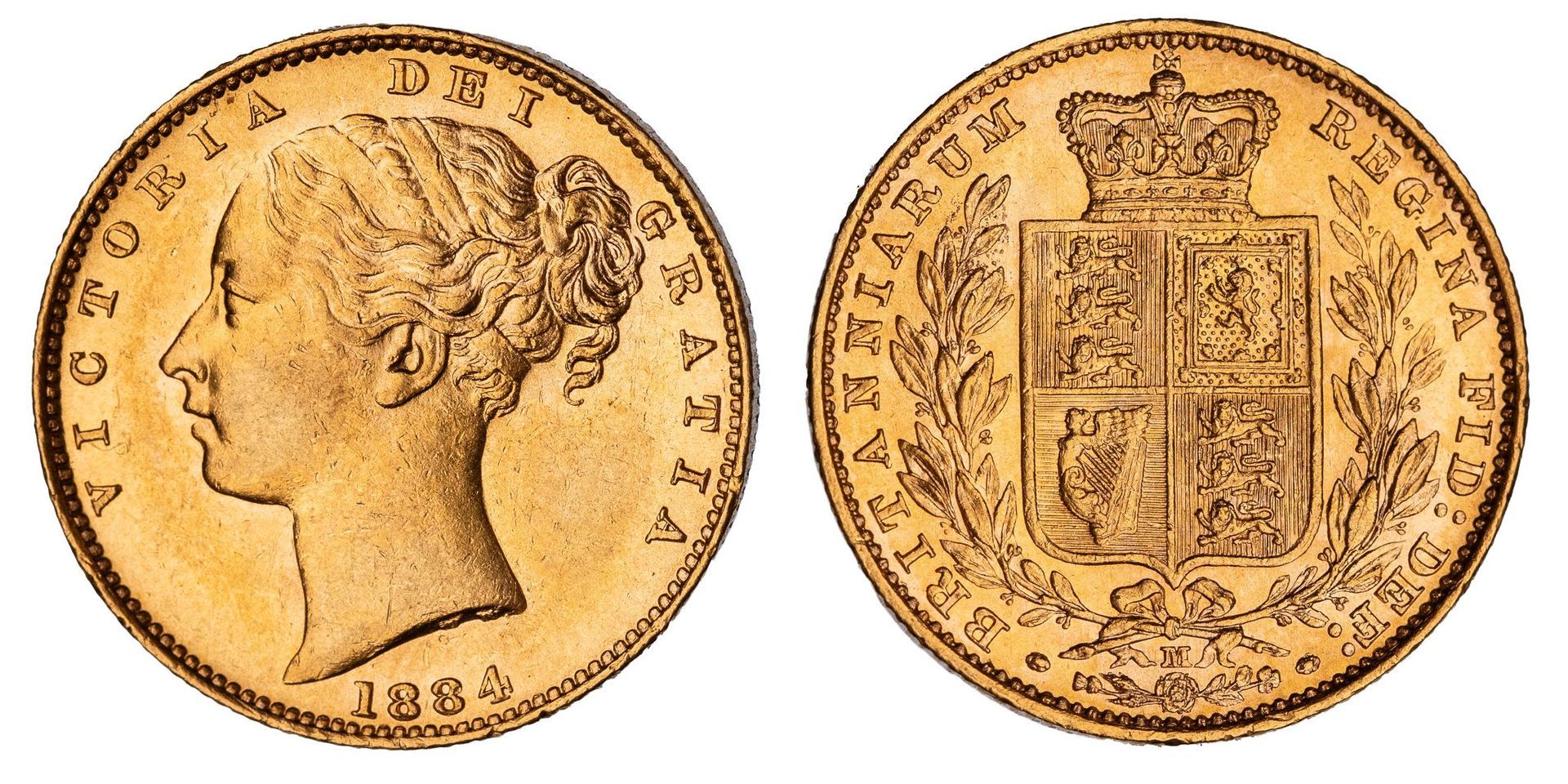
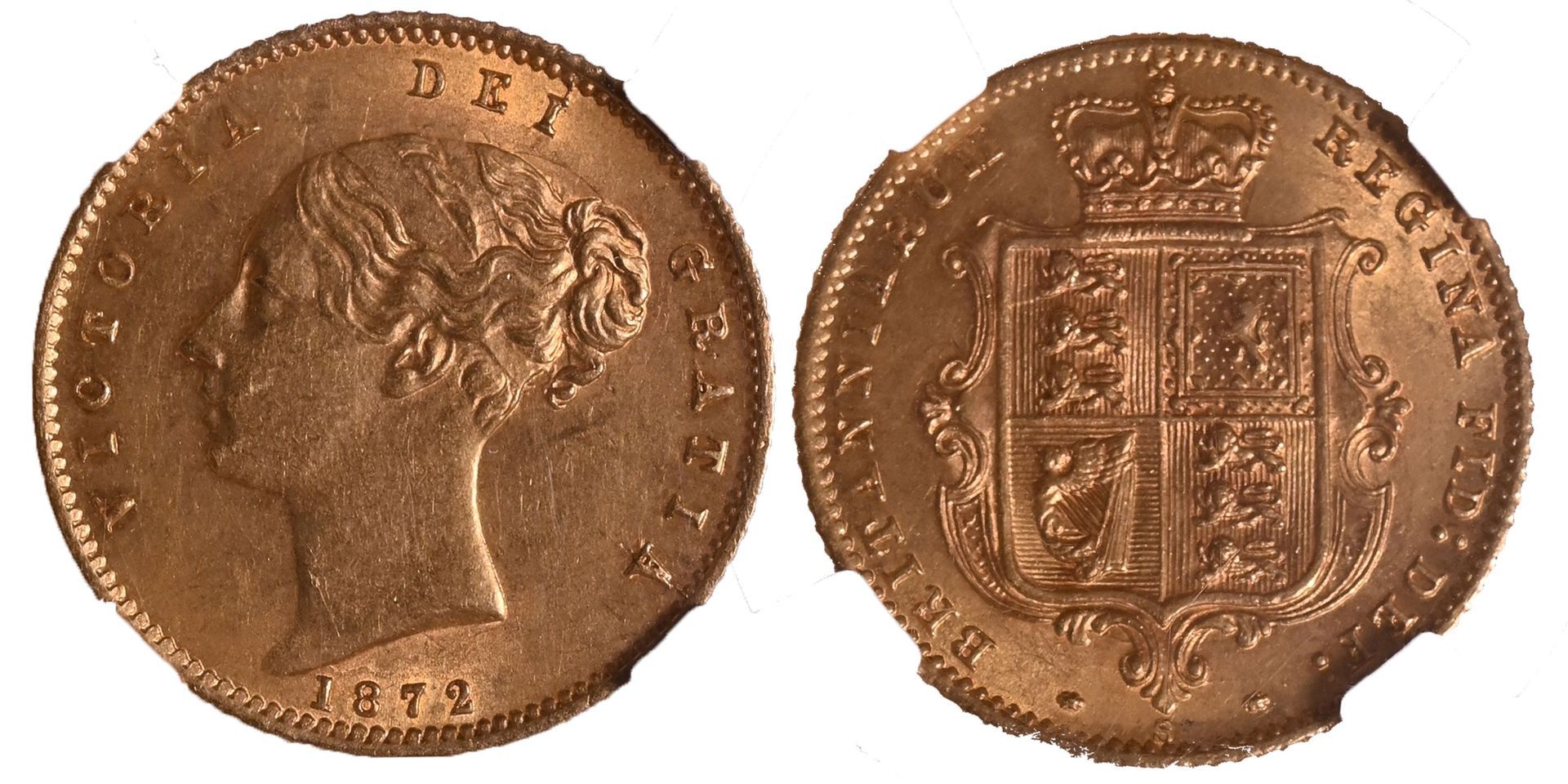
Young Head, shield reverse 1871–1887
From 1871, Australian mints struck the same designs as London and added a small letter to show where each coin was made. The shield reverse shows the royal coat of arms inside a laurel wreath. Sovereigns were struck with either this shield or St George, while every Australian Young Head half sovereign carries the shield.
Mint mark: S (Sydney) or M (Melbourne), on the reverse just below the shield.
The 1886 Melbourne shield sovereign is a noted rarity. See Australia's rarest coins.
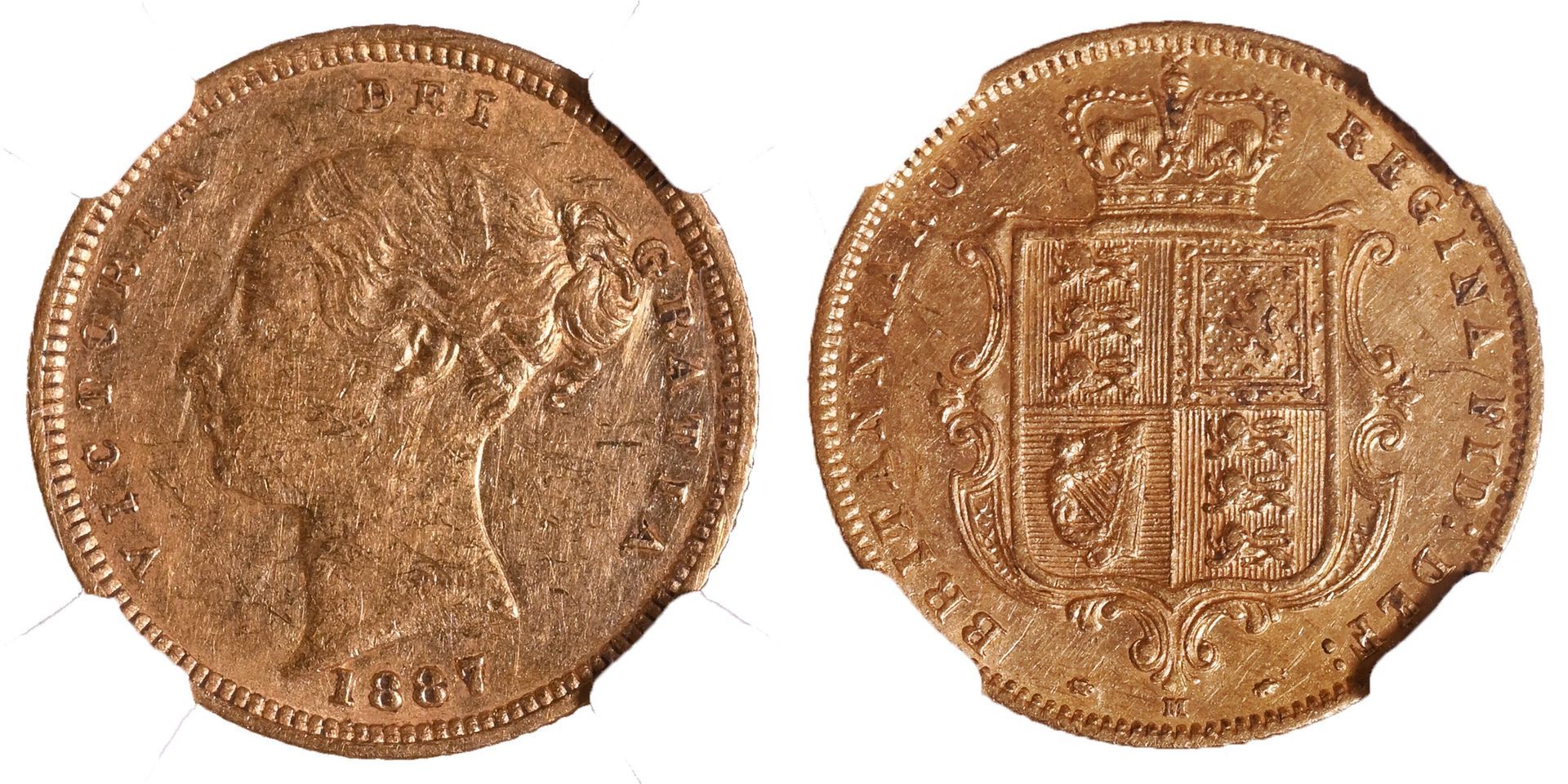
Young Head, St George reverse 1871–1887
The same young portrait of Queen Victoria, paired with Benedetto Pistrucci's design of St George slaying the dragon. On this type the mint mark sits on the portrait side rather than the reverse, which catches many people out.
Mint mark: S or M, on the portrait side, just below the Queen's neck.
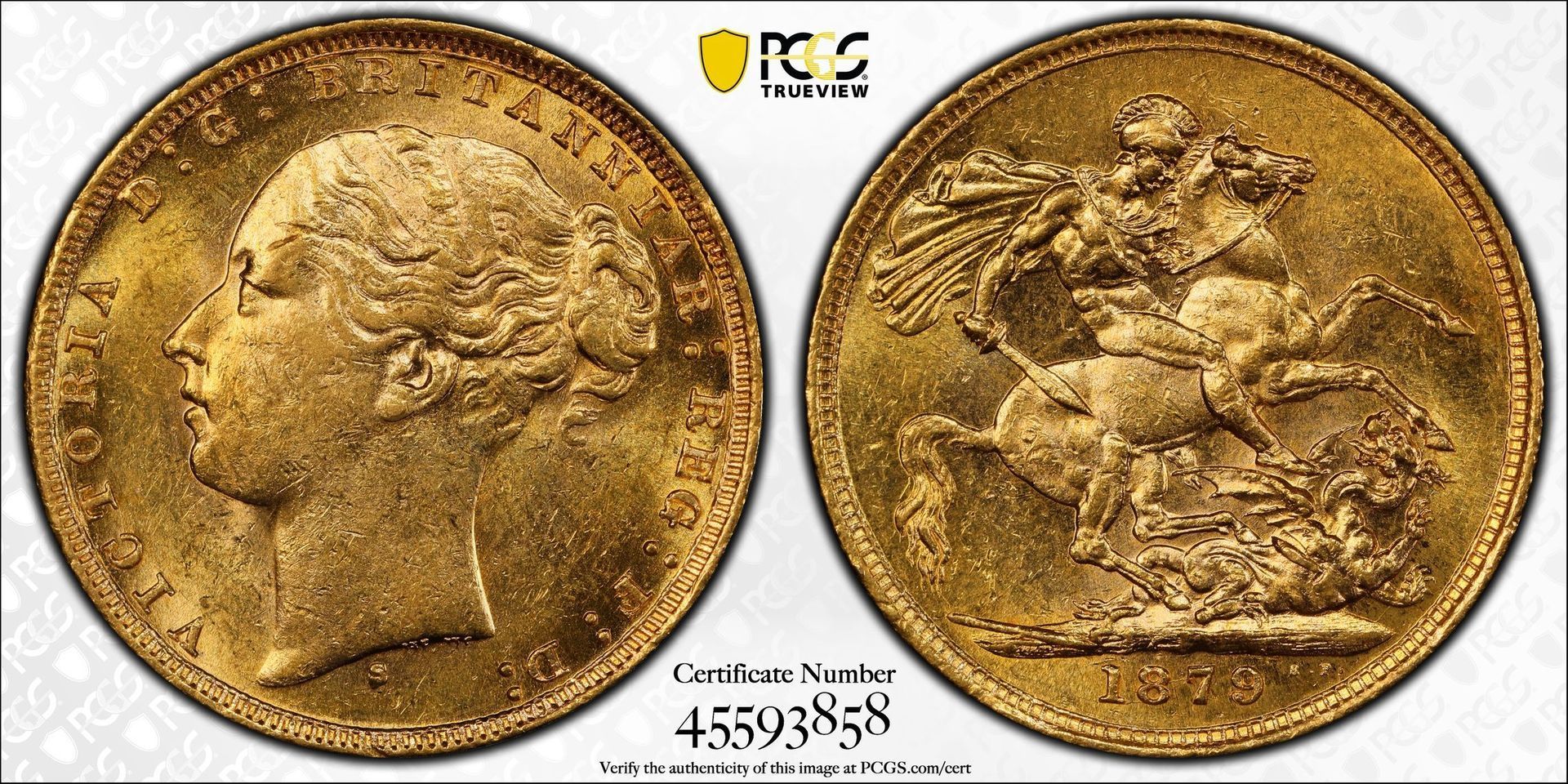
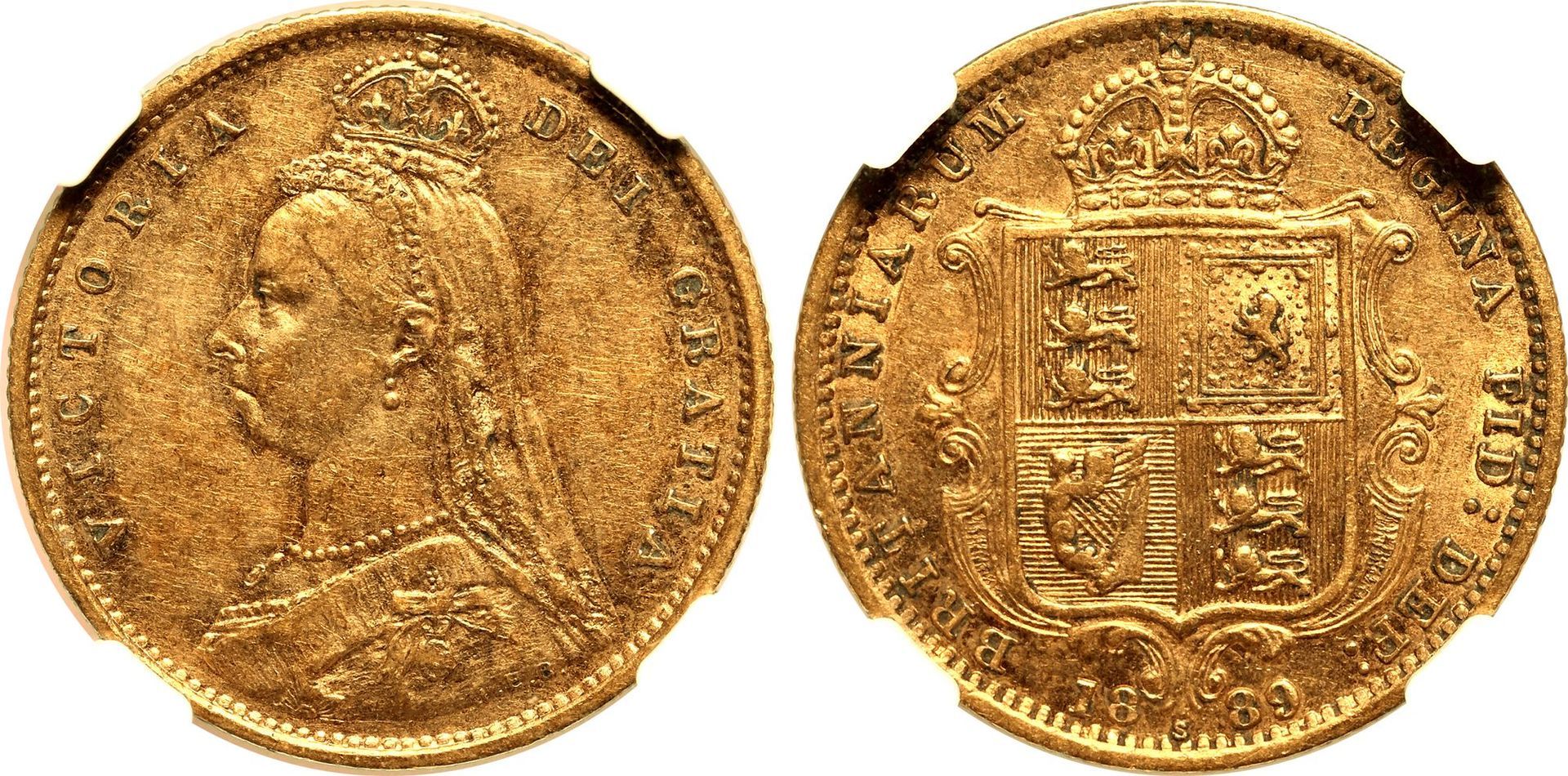
Jubilee Head 1887–1893
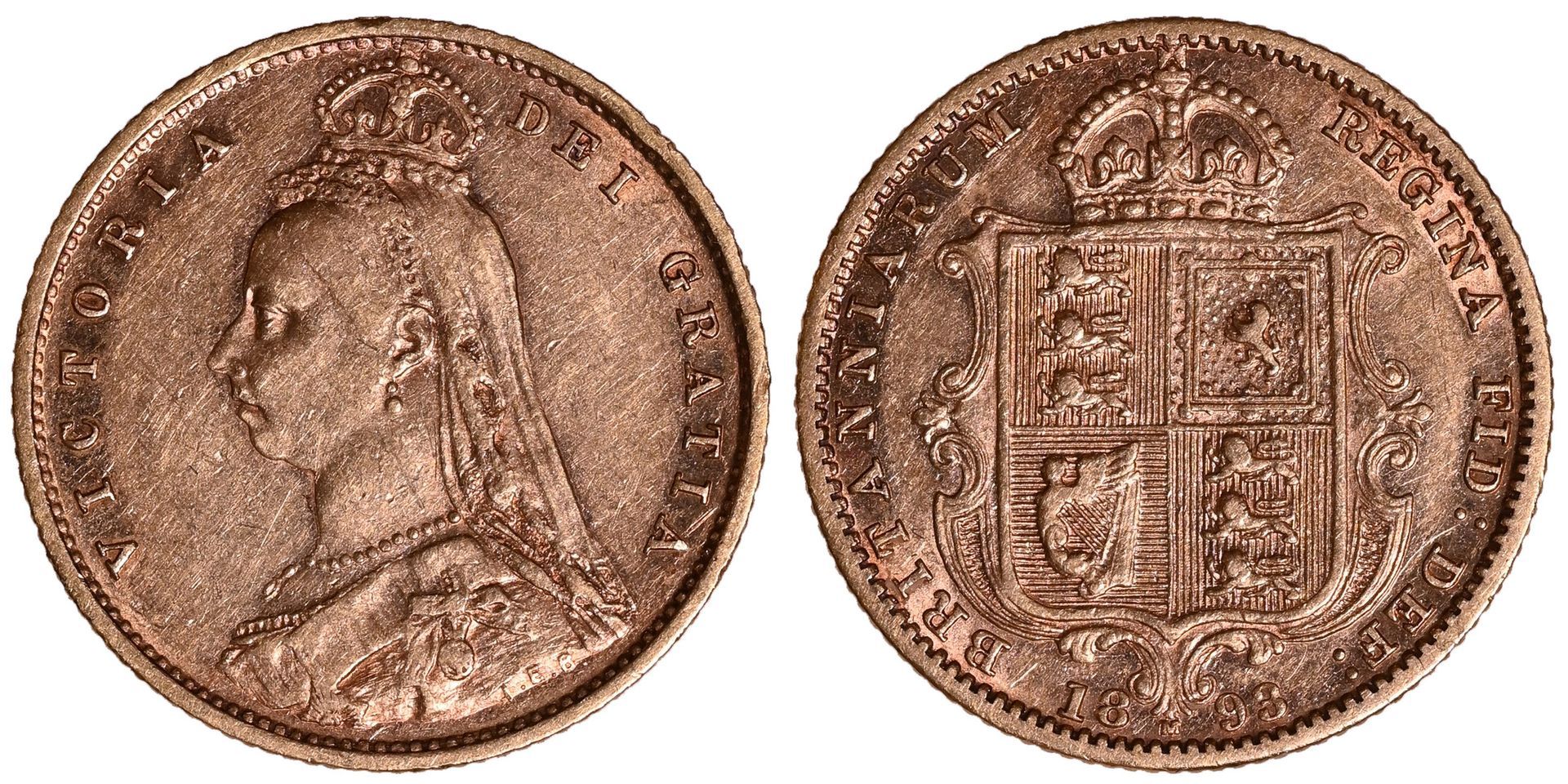
Introduced for Queen Victoria's Golden Jubilee, with an older portrait wearing a small crown and veil. Sovereigns carry St George, and half sovereigns carry a crowned shield. A short series, and scarce in high grade.
Mint mark: S or M. On sovereigns, on the reverse just above the date. On half sovereigns, below the shield.
1887 also produced the Sydney Mint five pound proof, one of Australia's great gold rarities. See Australia's rarest coins.
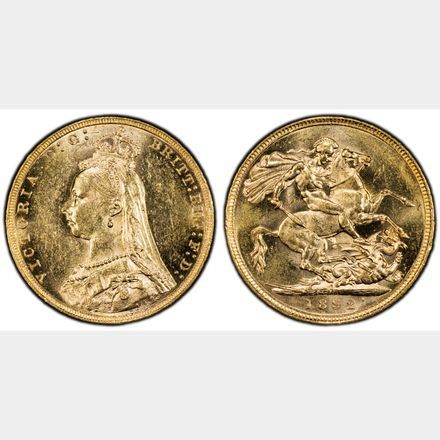
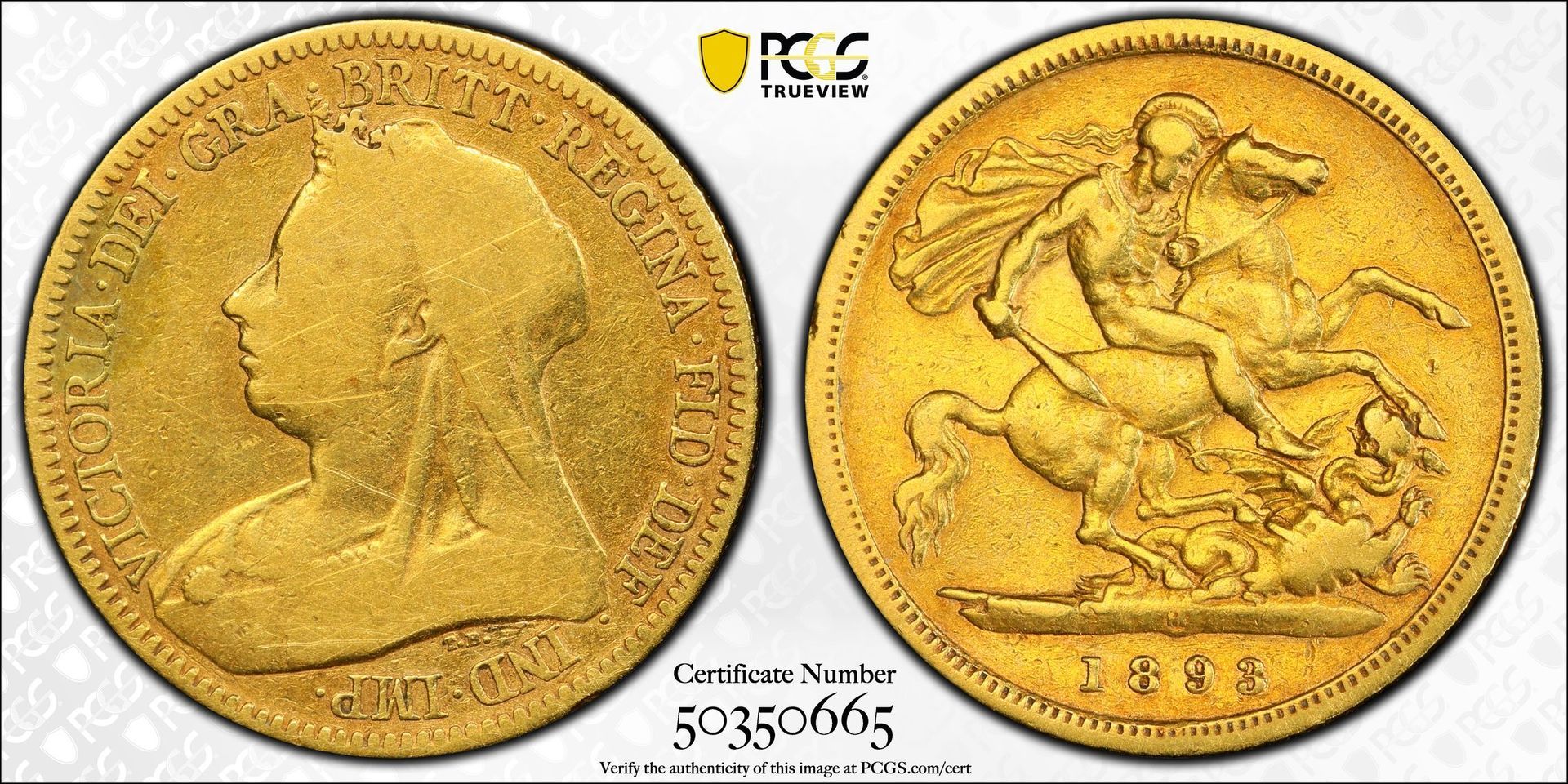
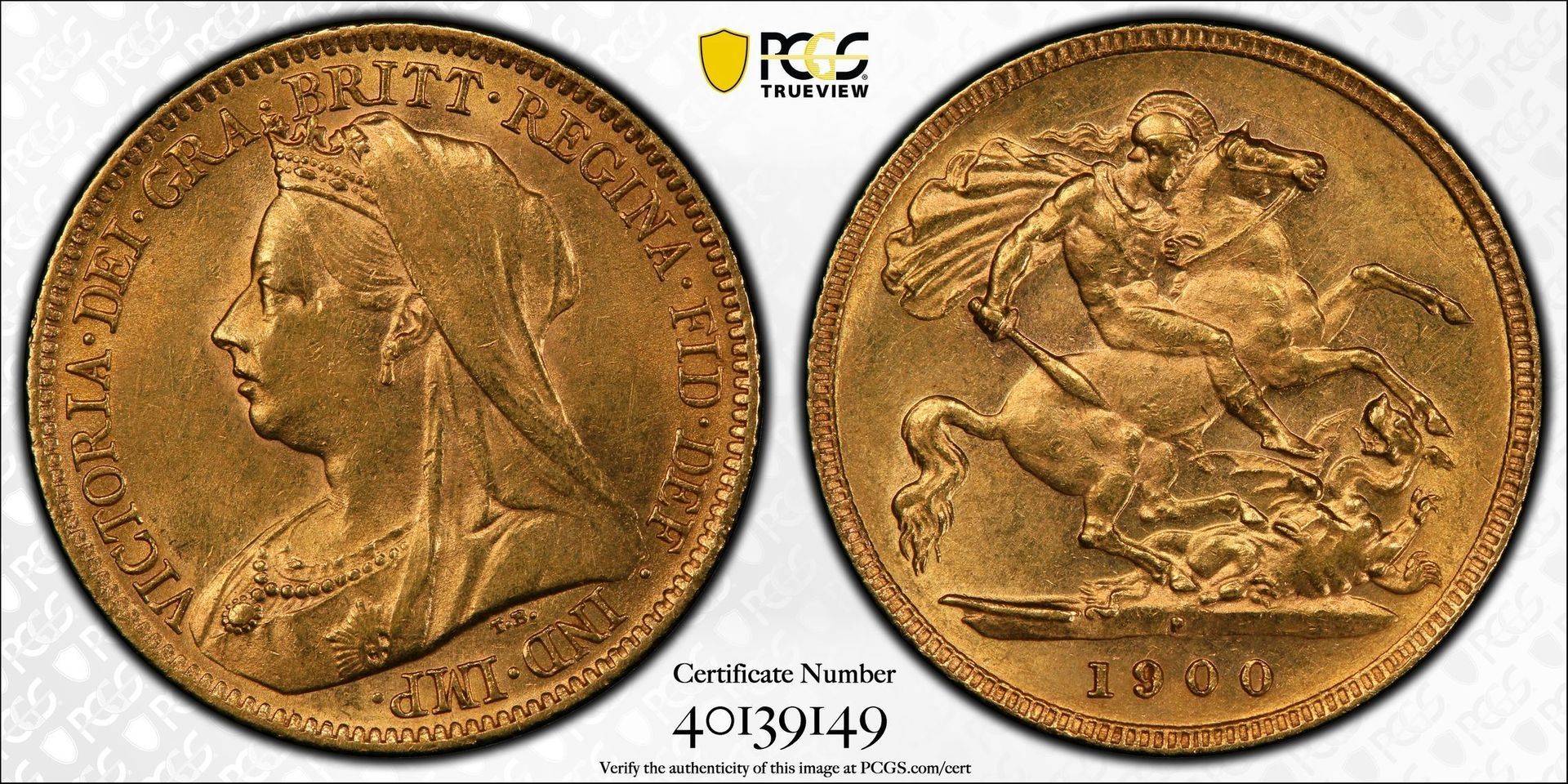
Veiled Head 1893–1901
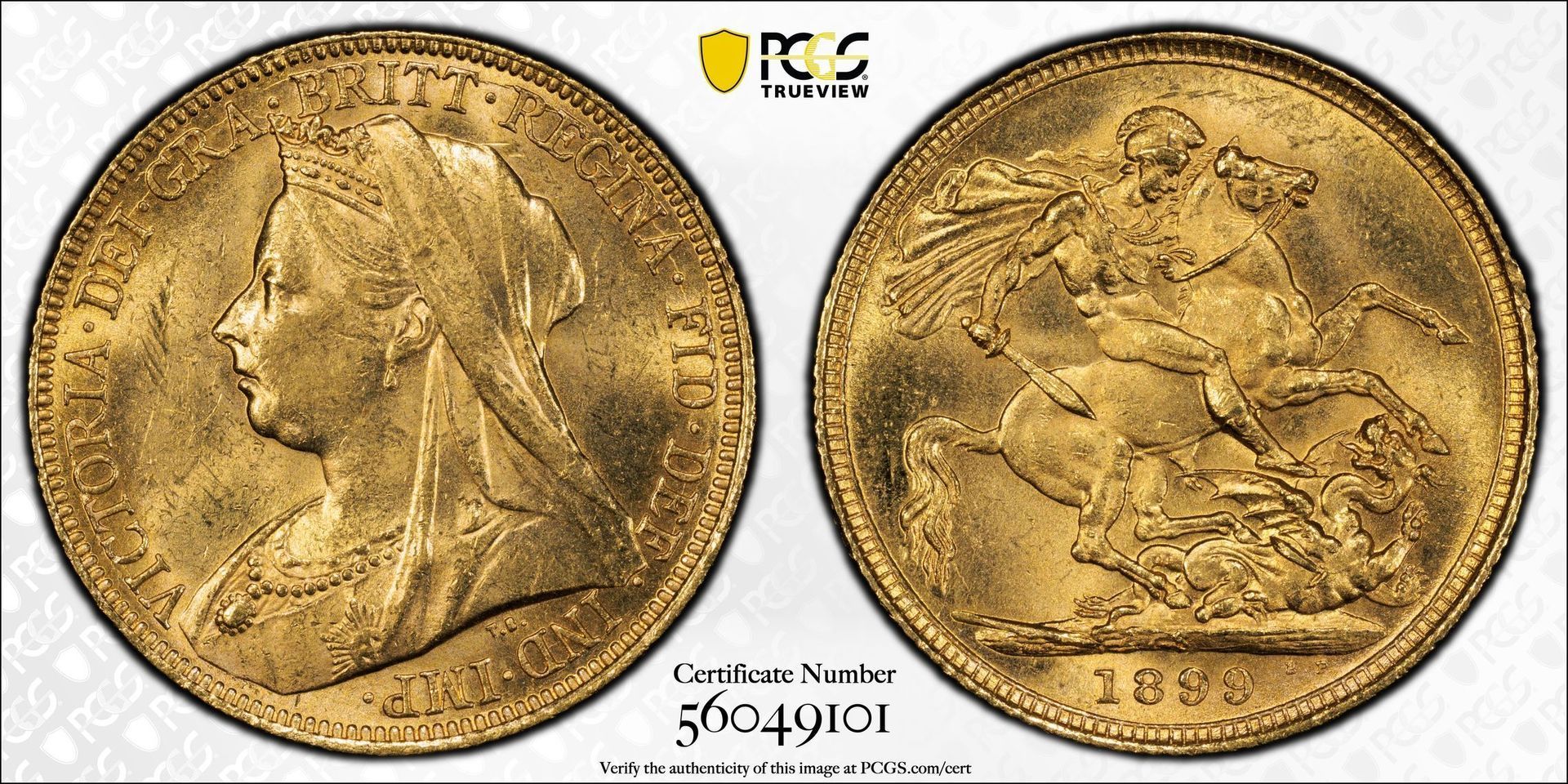
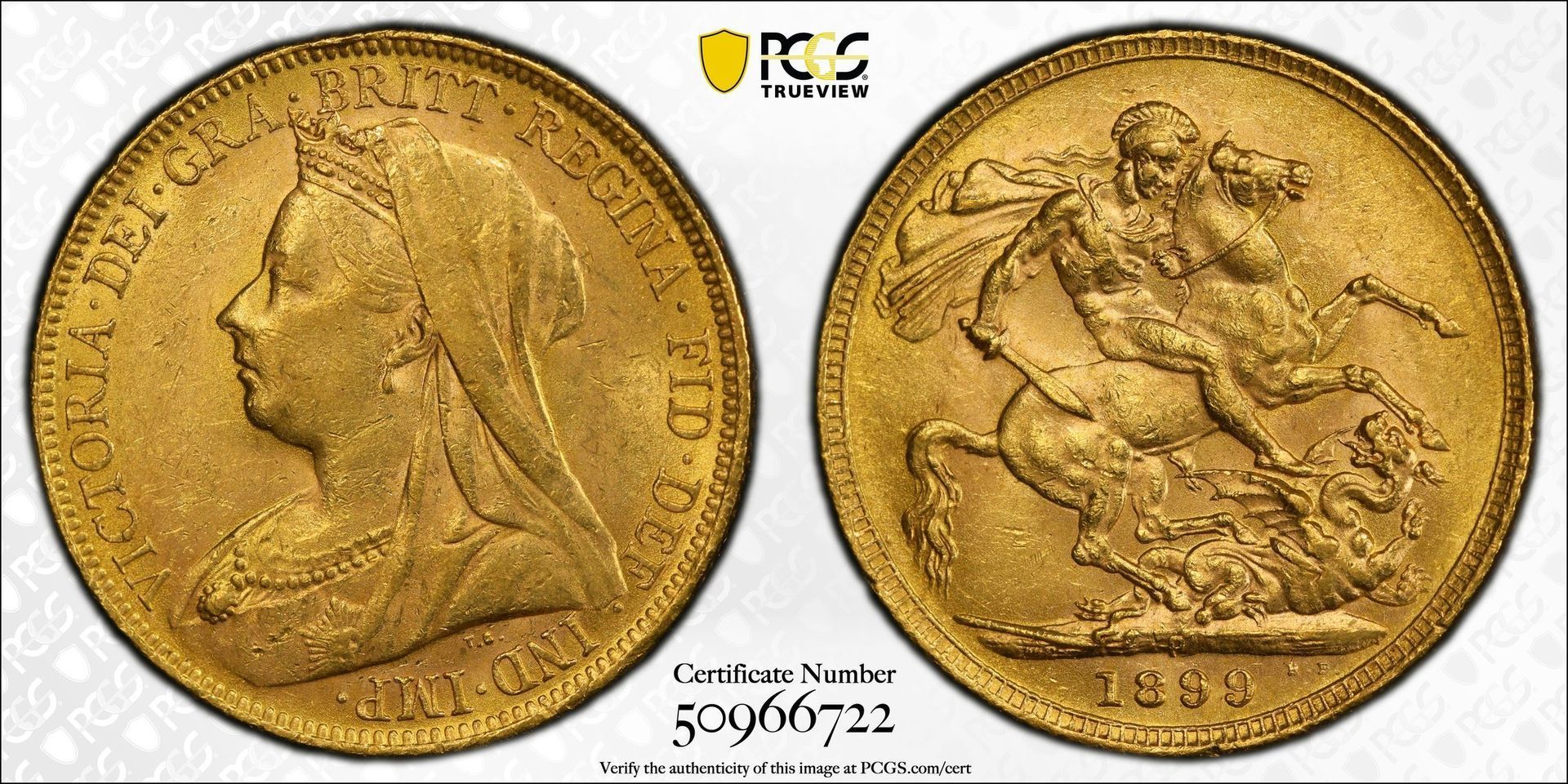
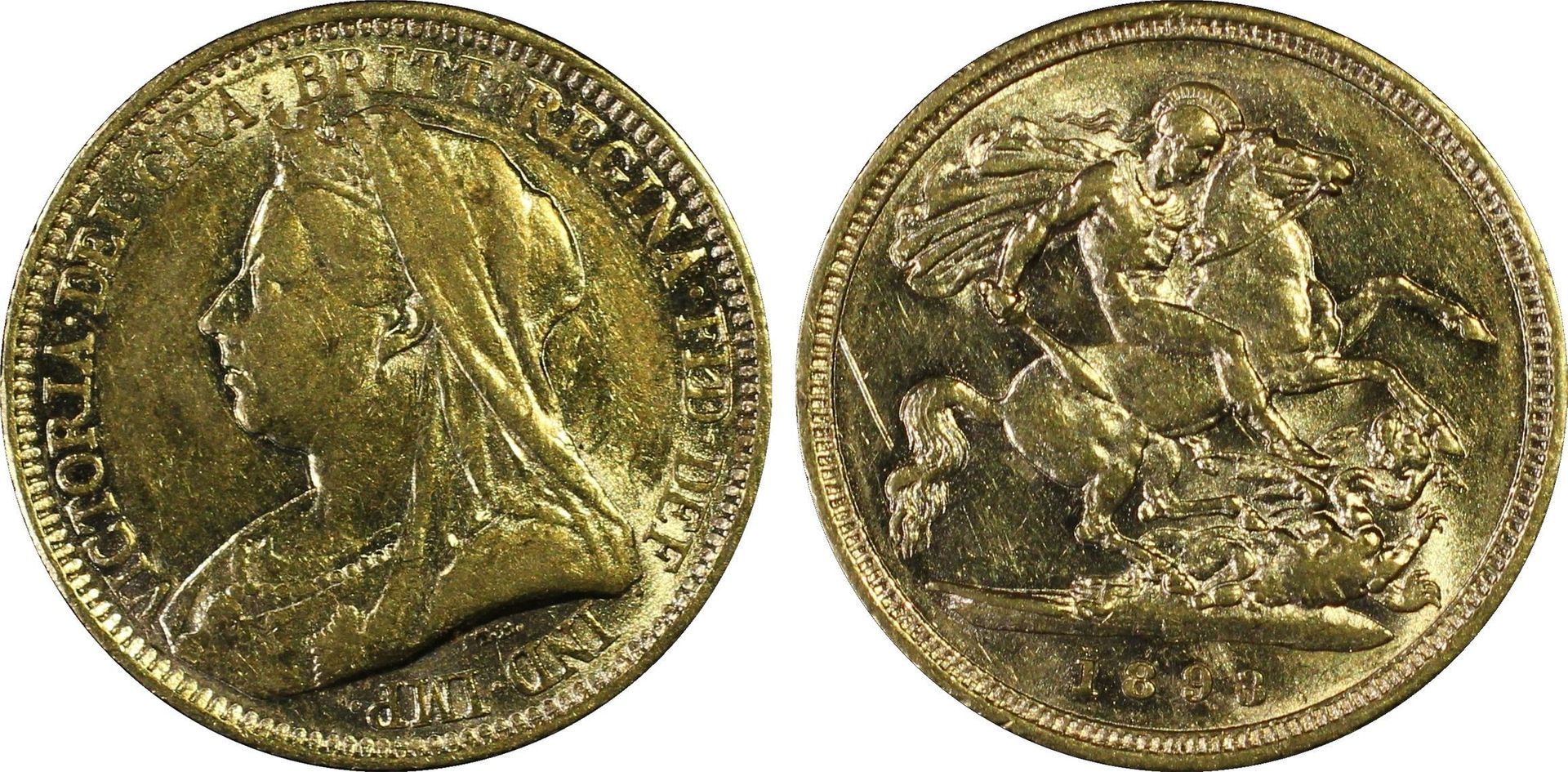
Queen Victoria's final portrait, older and wearing a long veil. The Perth Mint opened in 1899, so this is the first type struck at all three Australian mints. Sovereigns and half sovereigns both carry St George.
Mint mark: S, M or P (Perth), on the reverse on the ground line just above the date.
The 1893 Melbourne Veiled Head half sovereign is a key rarity. See Australia's rarest coins.
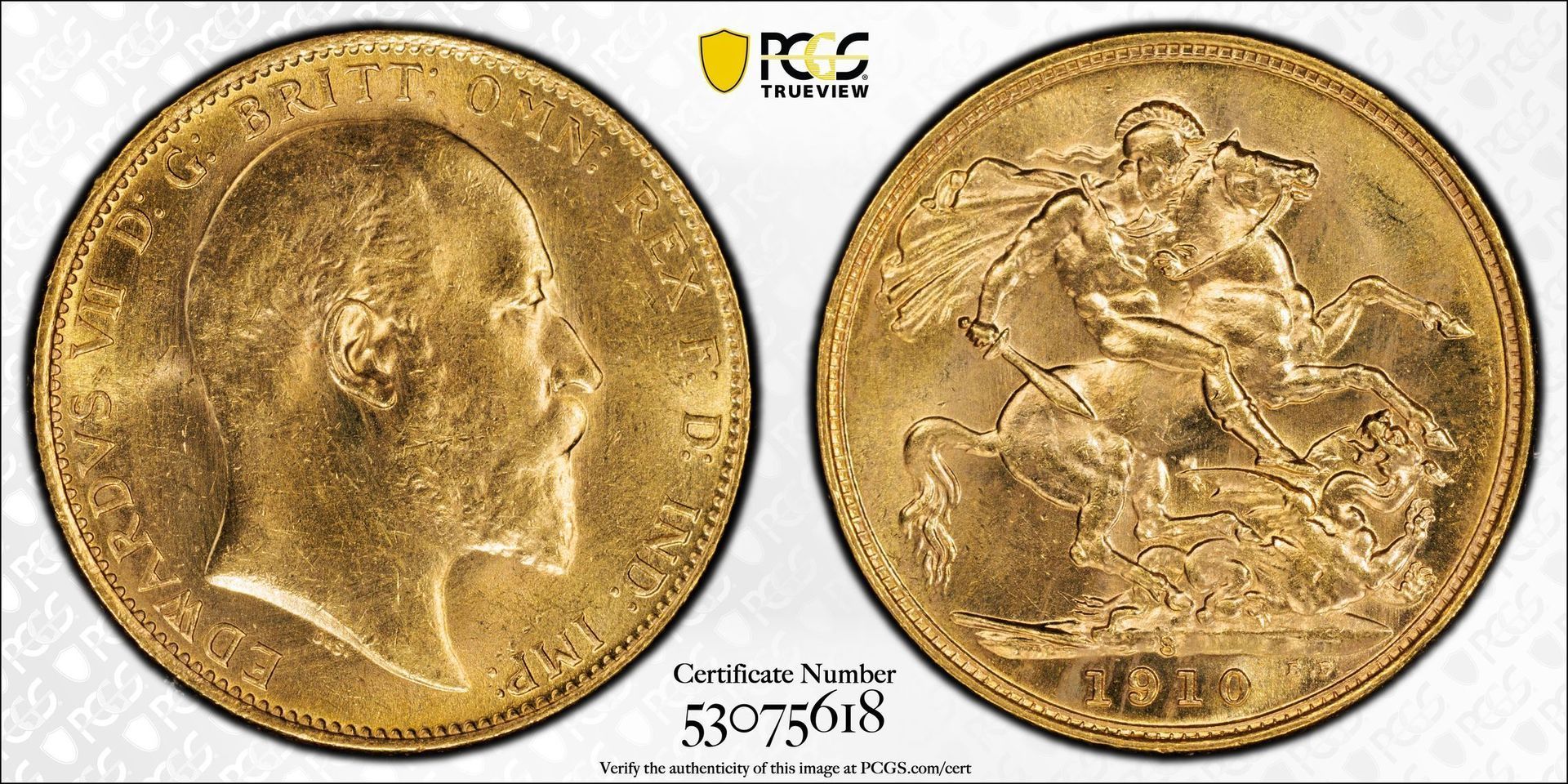
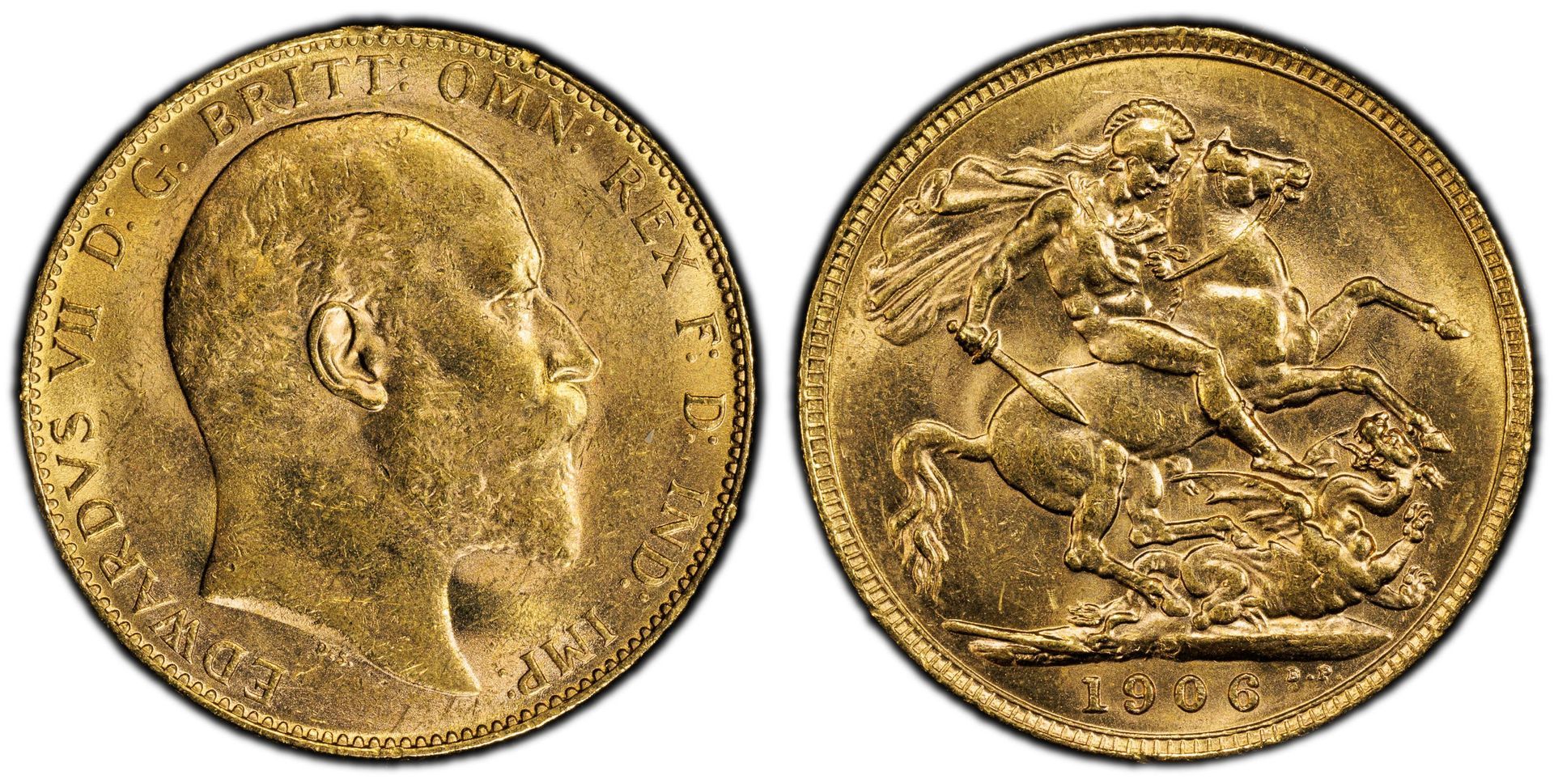
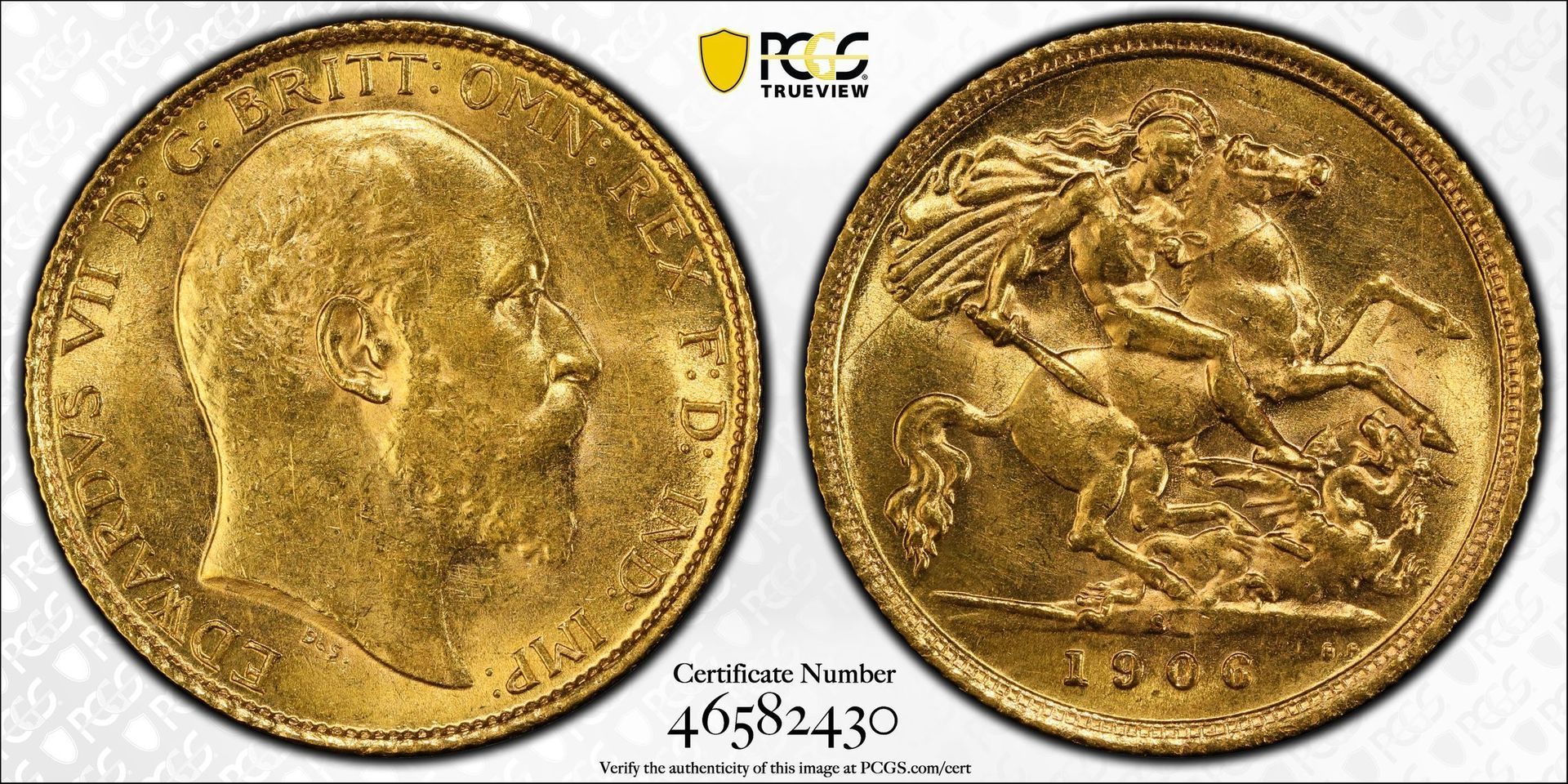
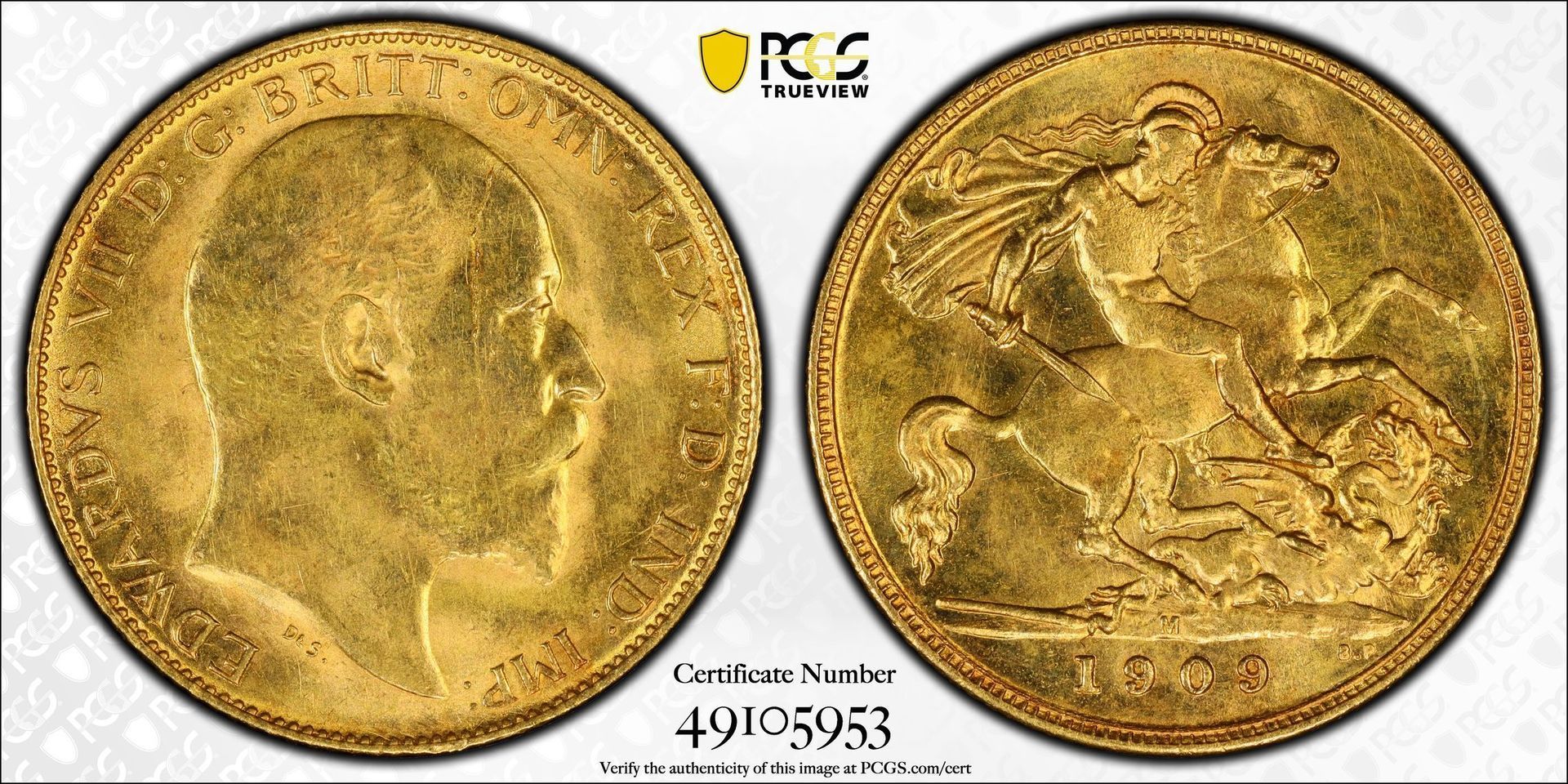
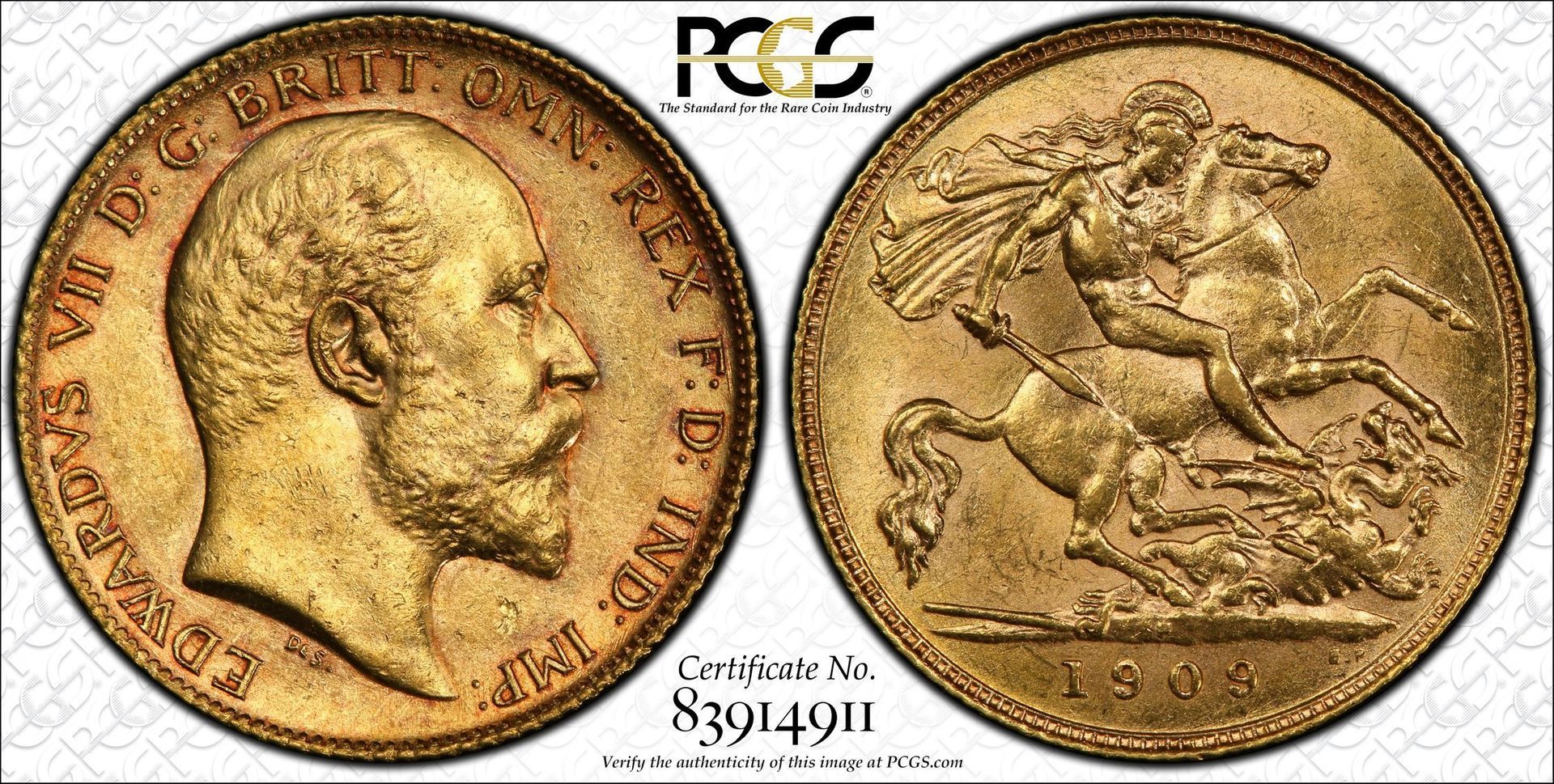
Edward VII 1902–1910
King Edward VII, bearded and facing right. Struck at Sydney, Melbourne and Perth, with St George on the reverse of both sovereigns and half sovereigns.
Mint mark: S, M or P, on the reverse on the ground line just above the date.
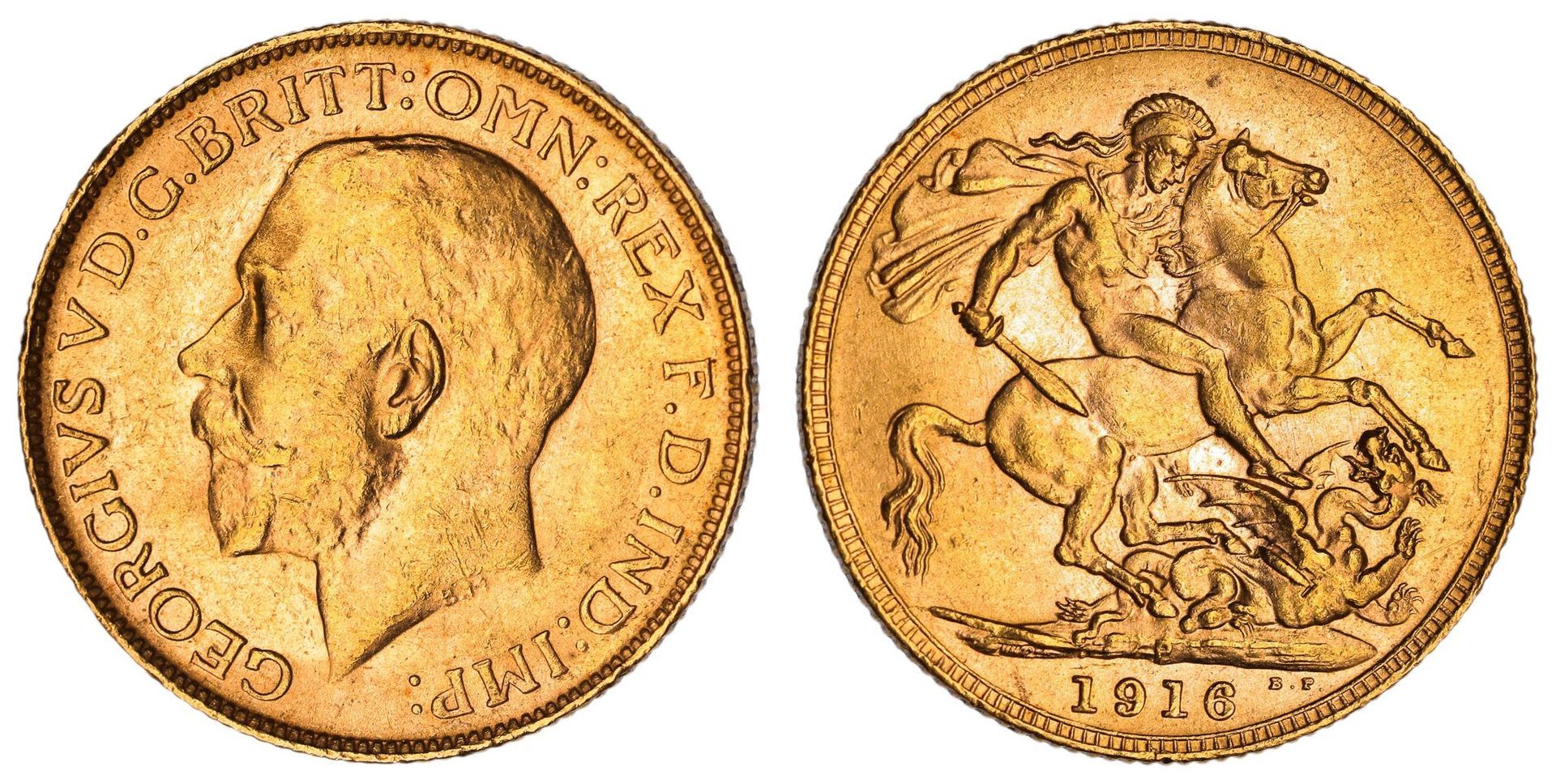
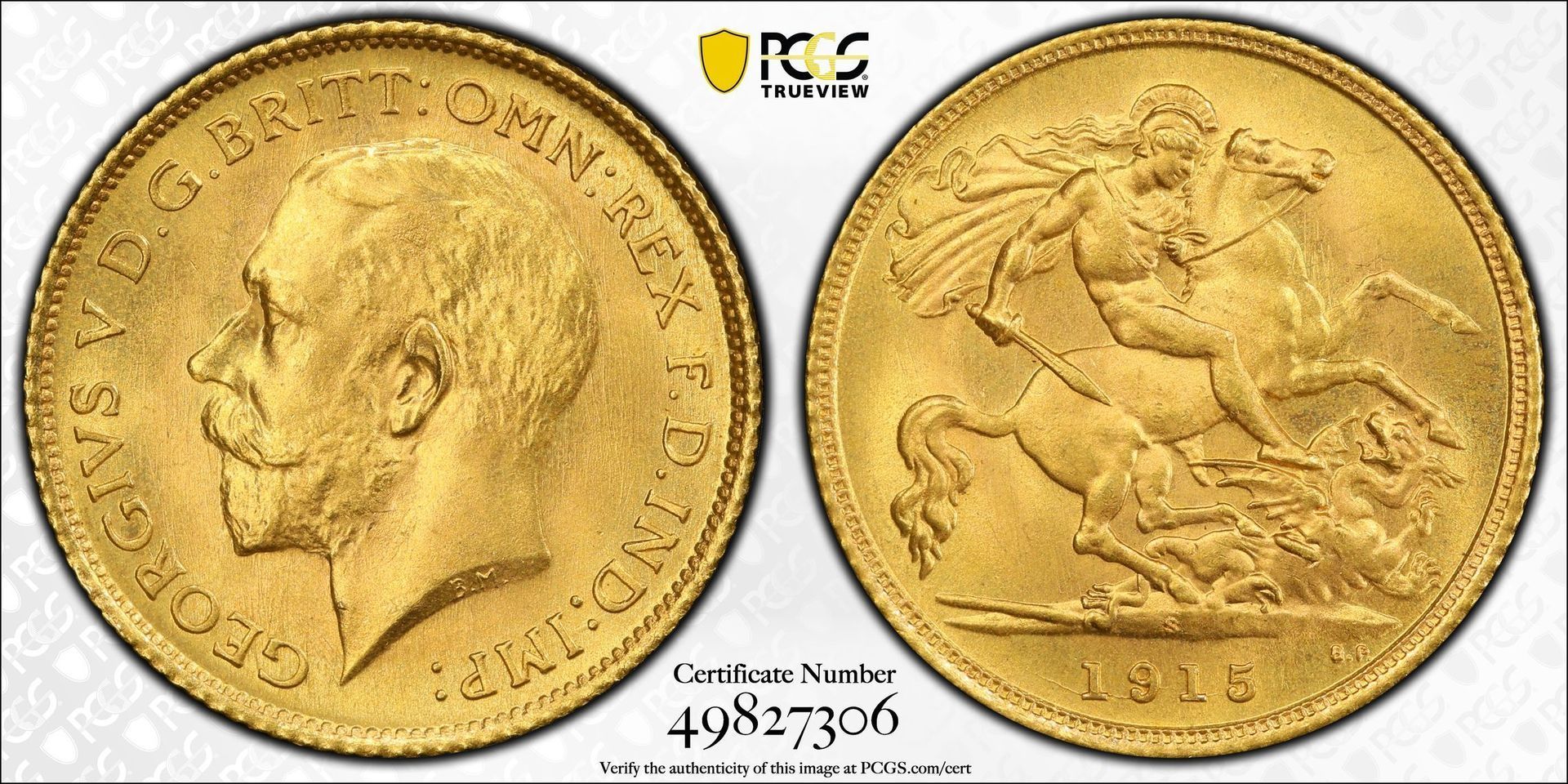
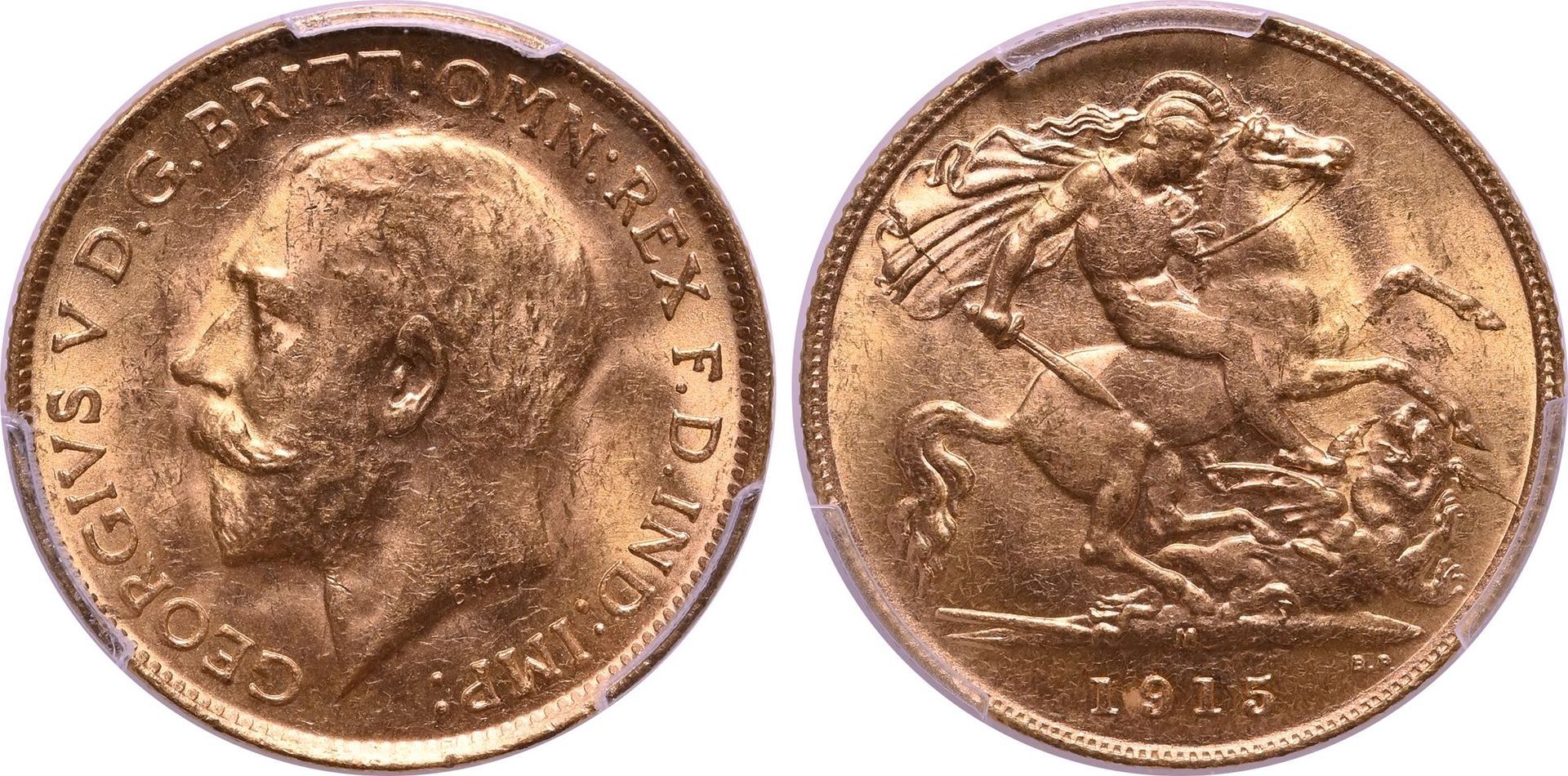
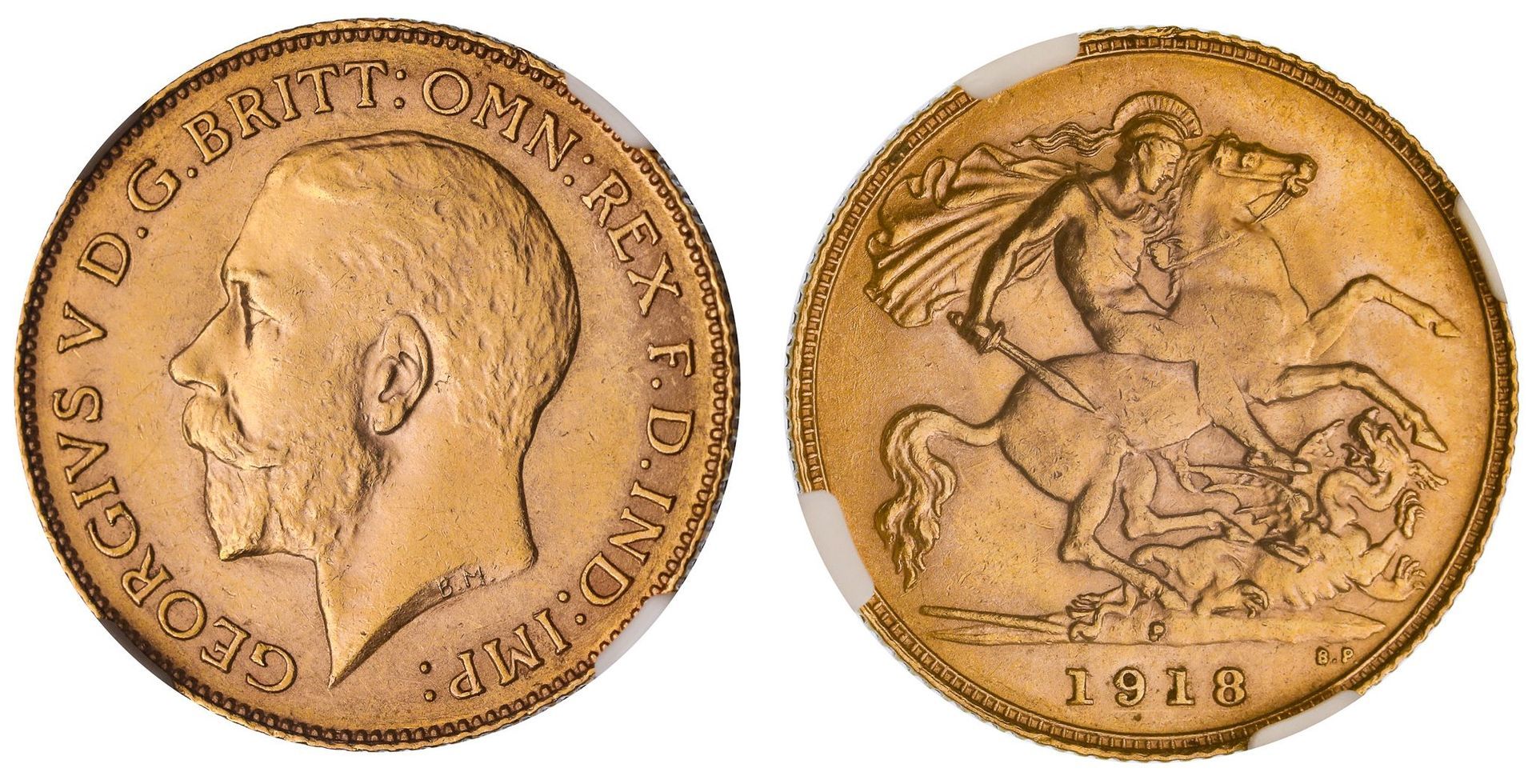
George V 1911–1928
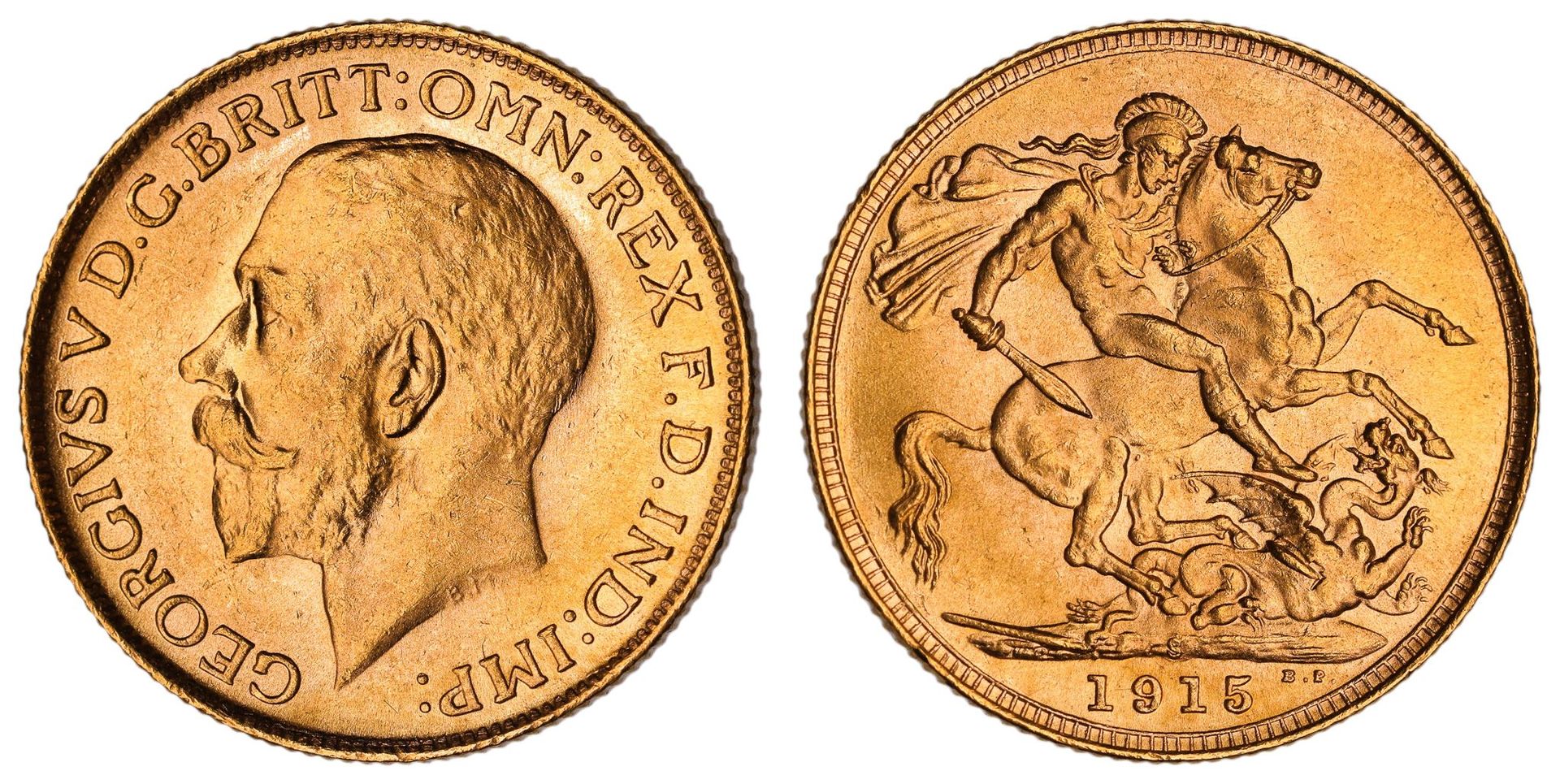
King George V, bearded and facing left, with St George on the reverse. The largest Australian series. Common dates sell close to their gold value, but several dates from the 1920s are genuine rarities. The Sydney Mint closed in 1926, and half sovereigns were struck in far smaller numbers and ended earlier than sovereigns.
Mint mark: S, M or P, on the reverse on the ground line just above the date.
Key dates include the 1920 and 1926 Sydney, 1921 Melbourne, 1922 Sydney and Melbourne, and 1923 Sydney sovereigns. See Australia's rarest coins.
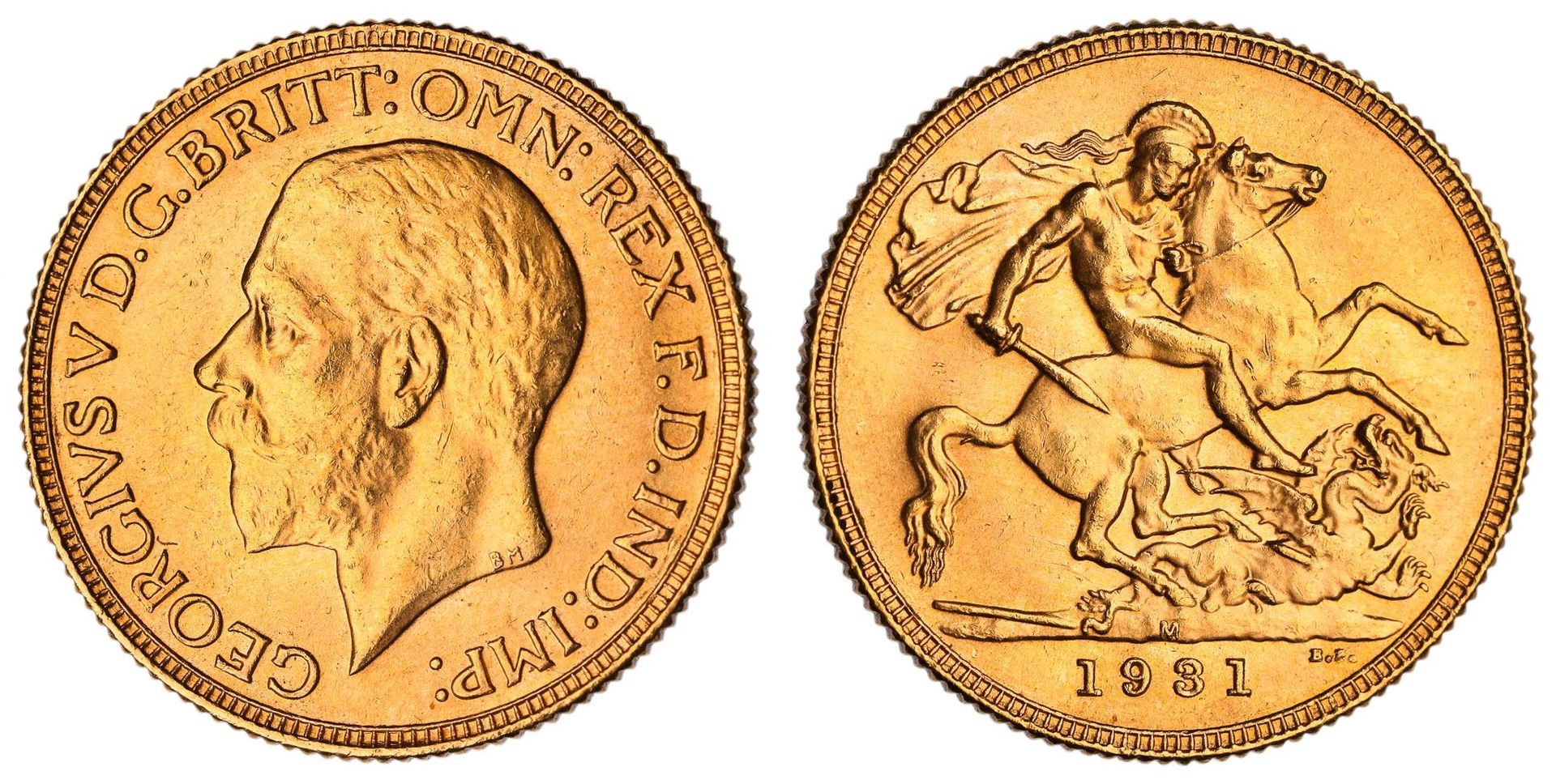
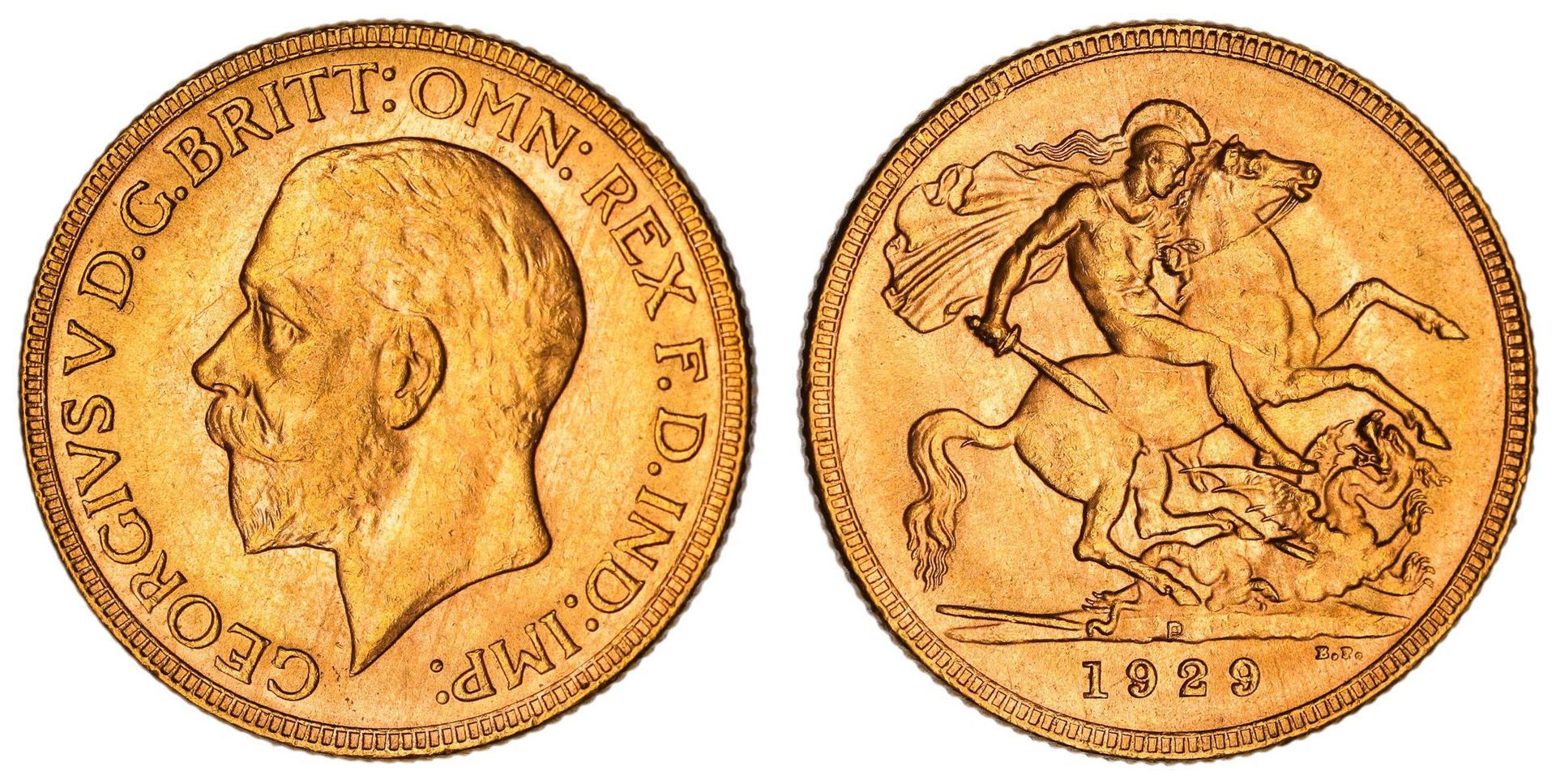
George V, Small Head 1929–1931
A smaller, re-cut portrait of George V, used for the last sovereigns struck in Australia. Melbourne and Perth only, as the Sydney Mint had closed.
Mint mark: M or P, on the reverse on the ground line just above the date.
Found yours, or still not sure?
Send us a photo of both sides and our specialists will identify the date, mint and type, and tell you what it could realise at auction. Free and with no obligation.
What is your sovereign worth?
Most common dates sell close to their gold value. Scarce dates, early Sydney Mint coins and coins in exceptional condition can sell for many times more.
Common questions
Where is the mint mark on an Australian sovereign?
It depends on the type. Early Sydney Mint coins have no mint mark and read SYDNEY MINT AUSTRALIA instead. Young Head St George sovereigns carry it on the portrait side, below the Queen's neck. Shield reverse coins have it below the shield. From the Jubilee Head onwards, St George sovereigns and half sovereigns carry it on the reverse, just above the date.
What is the difference between Type I and Type II Sydney Mint sovereigns?
Type I sovereigns, struck in 1855 and 1856, show Queen Victoria with her hair tied by a plain ribbon. Type II, struck from 1857, adds a wreath of banksia leaves to her hair.
Are my sovereigns worth more than their gold value?
Most common-date sovereigns sell close to their gold value, which our gold sovereign value guide calculates live. Scarce dates, early Sydney Mint coins and coins in exceptional condition can sell for many times more, so it is worth having them checked before selling.